 26th April 2012. This must be one of the most-photographed ‘deserted railway stations’ in the U.K., to judge from the number of on-line shots. It is the old Tettenhall station, just north of Wolverhampton. It was apparently opened by the Great Western Railway in 1925 – and closed for passengers in 1931, as it just did not catch on. Nowadays, trackless, it is part of a long LNR, or Local Nature Reserve. We walked along a mile or so of it.
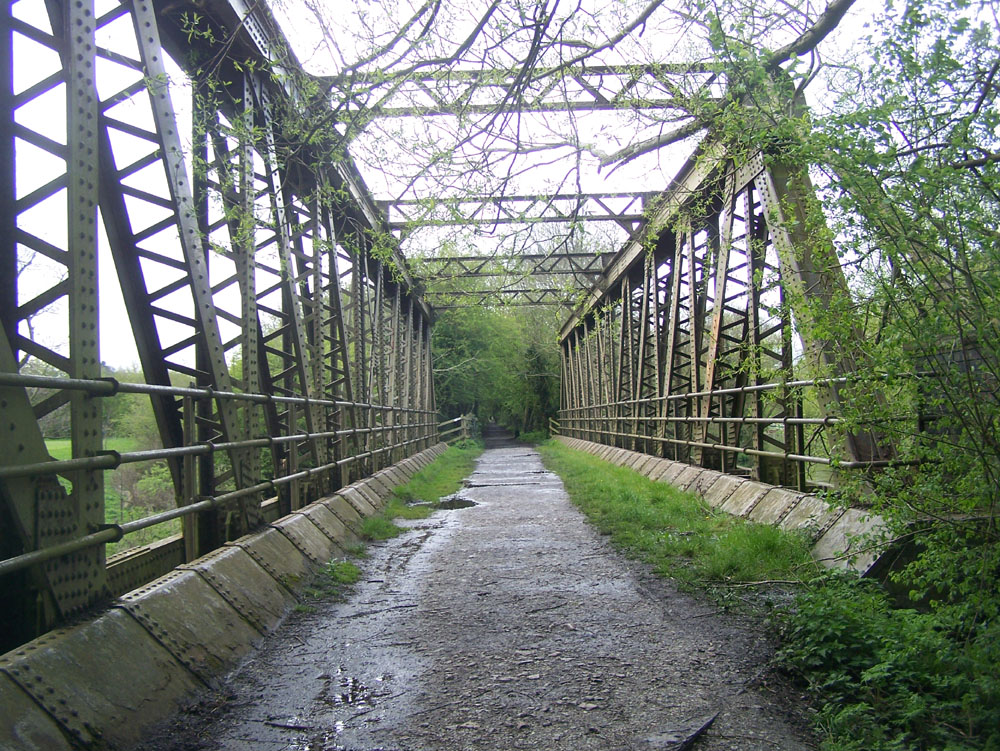 This girder bridge crosses the Staffordshire & Worcester canal, and also the Smestow Brook, a small river. As we have remarked before, the landscape that was left behind after the last Ice Age has shaped most of our own modern lines of communication too. At this point, the railway and the canal follow the line of the Smestow Brook; and the Smestow is, at this point, simply skirting the southern edge of a relatively large sandstone outcrop – the ‘Tettenhall Rock’.
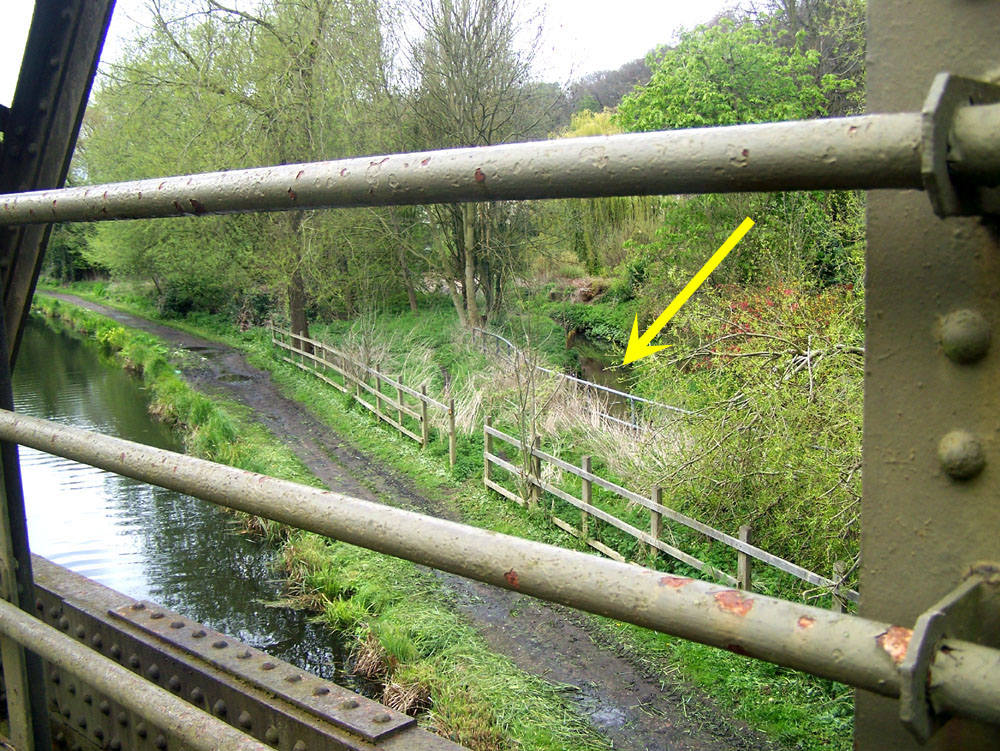 Here they all are. The shot is taken from the railway bridge. Below is the canal, and off to the right, indicated by the arrow & lower down, is the Smestow Brook. It was convenient for the canal company that surplus water could be run off into the Smestow.
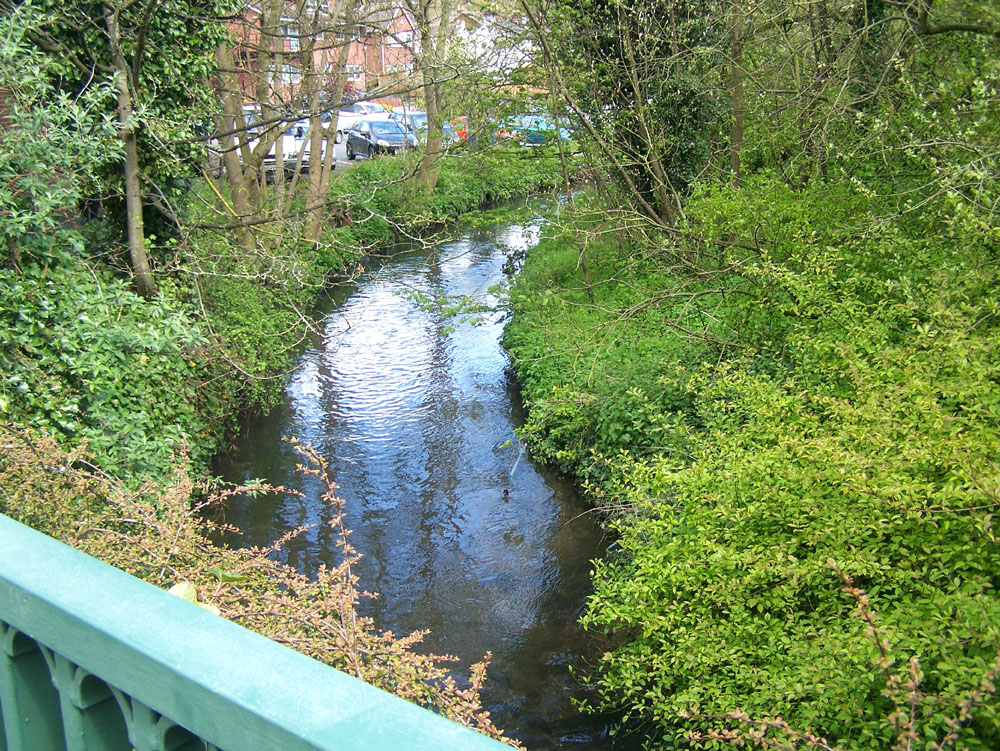 Here, at Compton, the Smestow runs under the Wolverhampton – Bridgnorth Road.
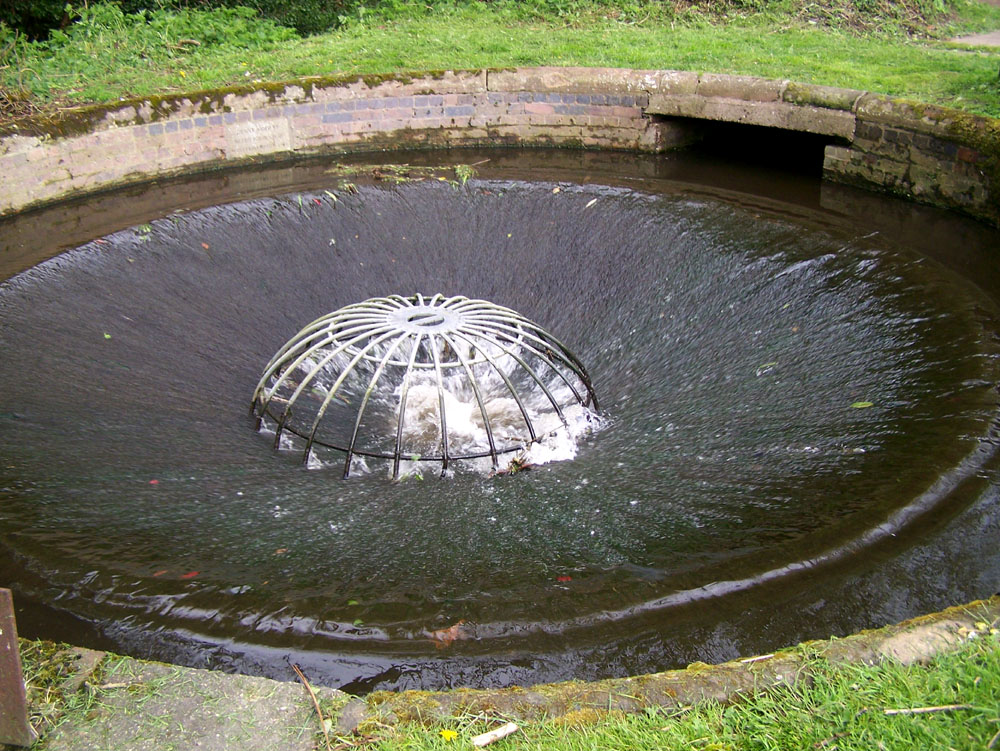 The Staffordshire & Worcestershire is characterized by these circular weirs (or whatever they are), which allow the water to flow downhill when a lock is emptied. We only had a short walk along the railway, and then went back along the canal.
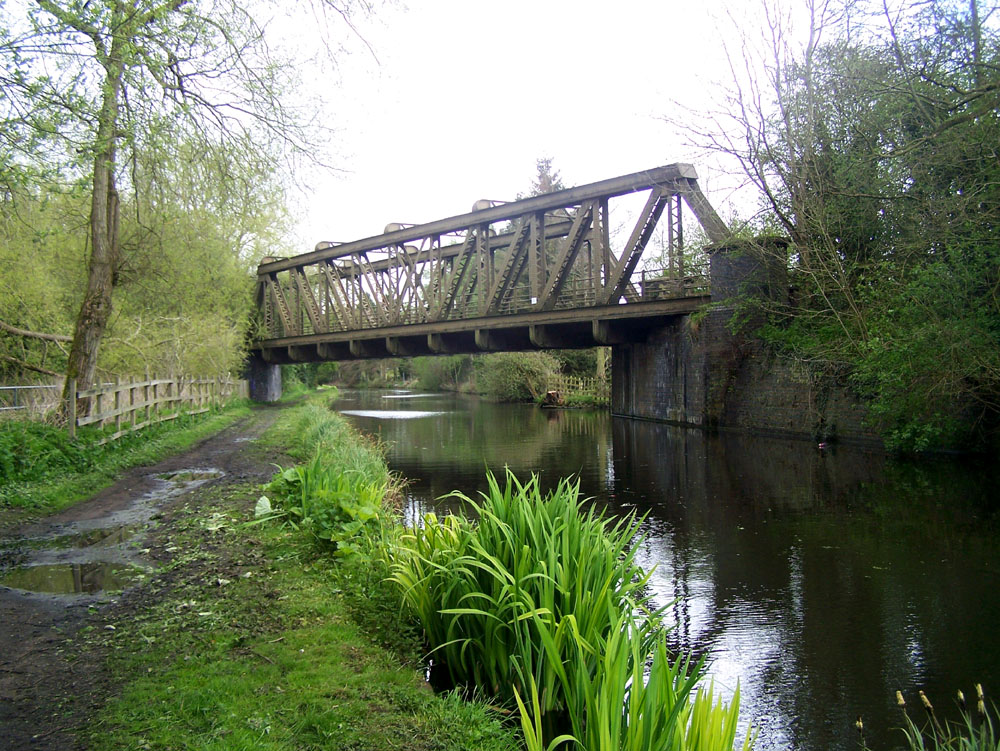 Here is our old friend the girder bridge seen this time from the canal. The Smestow, of course, is lower down on the left.
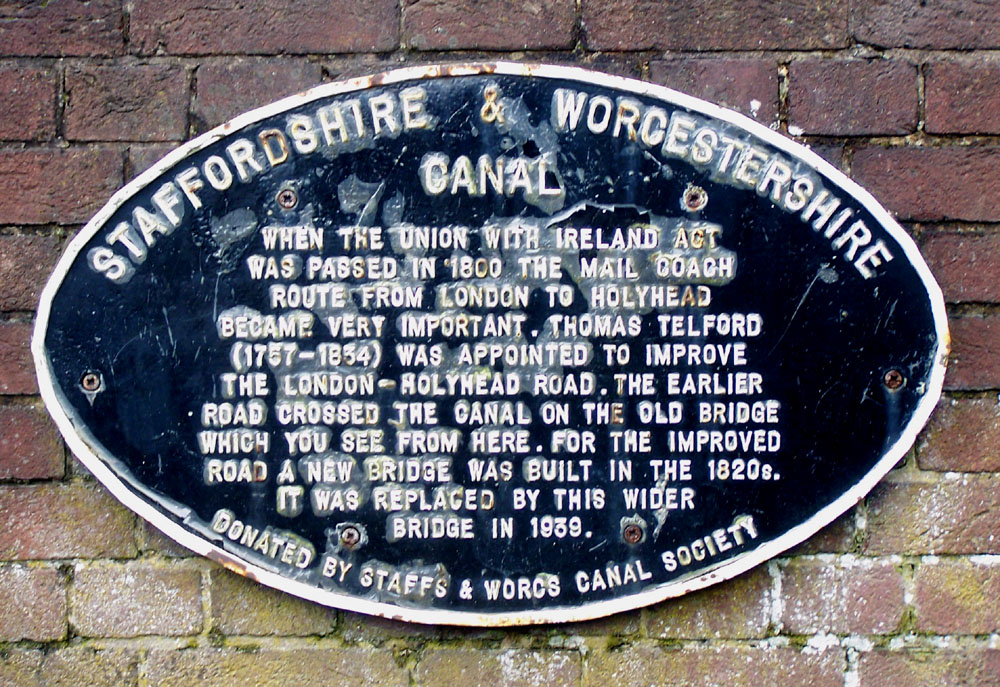 This district of Wolverhampton is called Newbridge, for the reason explained on the plaque above, to be found on the 1939 bridge. The road is now the A41. About half a mile back towards Wolverhampton is a now-closed pub. called ‘The Half-way House’. I suspect that this was formerly an Inn, which claimed to be half way between London & Holyhead. Must check that out… So nearly 200 years ago, the Mail Coaches thundered across Telford’s bridge on this site.
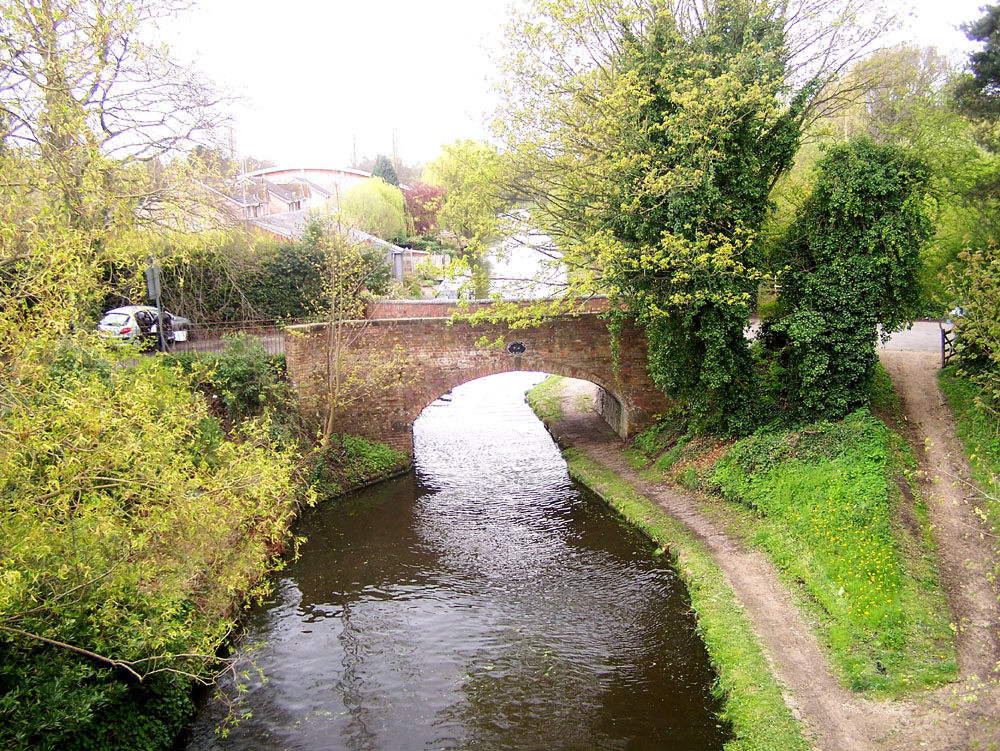 Yet the original bridge over the canal, as the plaque states, is still there, as you can see.
 Before Telford’s improvements in 1820, the Mail Coaches evidently followed a different route from London to Holyhead. This is the (or a?) route of Mail Coaches to Chester & Holyhead, taken from a Post Office Directory of 1808.