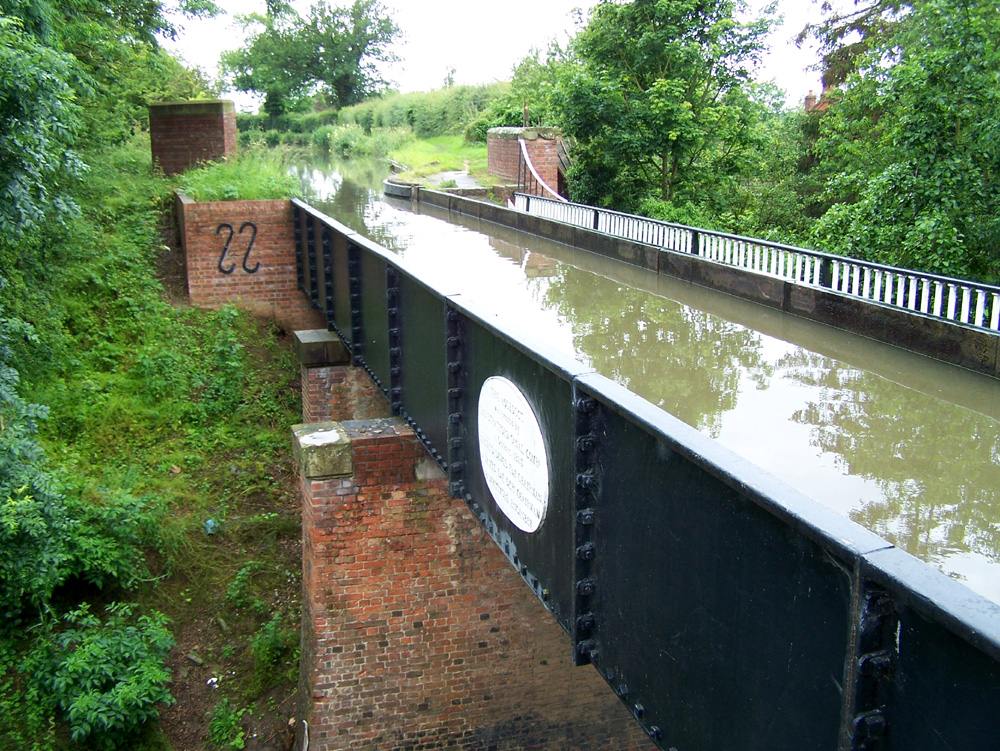
 7th July 2012. One of the great benefits of retirement (as I keep on saying) is that one can finally investigate things one has wondered about. For example, this canal aqueduct. It is located on what used to be the main road, the A34, between Birmingham and Stratford on Avon, and Oxford for that matter, and eventually Southampton; and Leeds in the northerly direction: but gentle reader, pray forgive me, for I digress before I have even begun. Mind you, if you haven’t really begun anything, why then, surely one can hardly digress from it? Anyway, in the last 50-odd years, I have driven underneath this aqueduct – located at the nice little village of Wootton Wawen – countless times, and often wanted to look at it, but never did until today.
 The width of the road is modest, constrained as it is by the brick piers which support the aqueduct. But the width of this road in the countryside between Birmingham and Stratford on Avon was always modest; the heavy traffic it formerly carried now travels by way of the M40 motorway. Still, there is a lot of local traffic & some time passed before there was a gap in it, in order that the photo. would give a faint impression of what it used to look like. The reason for my journey to Stratford was prosaic in the extreme; I wanted a new pair of shoes. I wished to have Hotters shoes (the ‘Kendal’ style), and to my surprise, there seemed to be no outlet for them in Birmingham. However, there was a Hotters shoe-shop in Stratford. They are gradually opening up their own retail shops. And why did I want Hotters shoes and no others? Because a few years ago, some of us did a gig at a huge footwear exhibition at the NEC, on the Hotters stand. They asked for all our shoe sizes in advance. This is the only time this has ever happened to me in over 50 years of playing; but the reason is self-evident: they did not want people playing on their stand wearing Clarks shoes, or indeed anybody else’s. So we were each given a nice free pair of shoes. They were exceptionally comfortable, and lasted for years. Q.E.D. (I have no connection whatever with Hotters; I just wear their excellent shoes!)
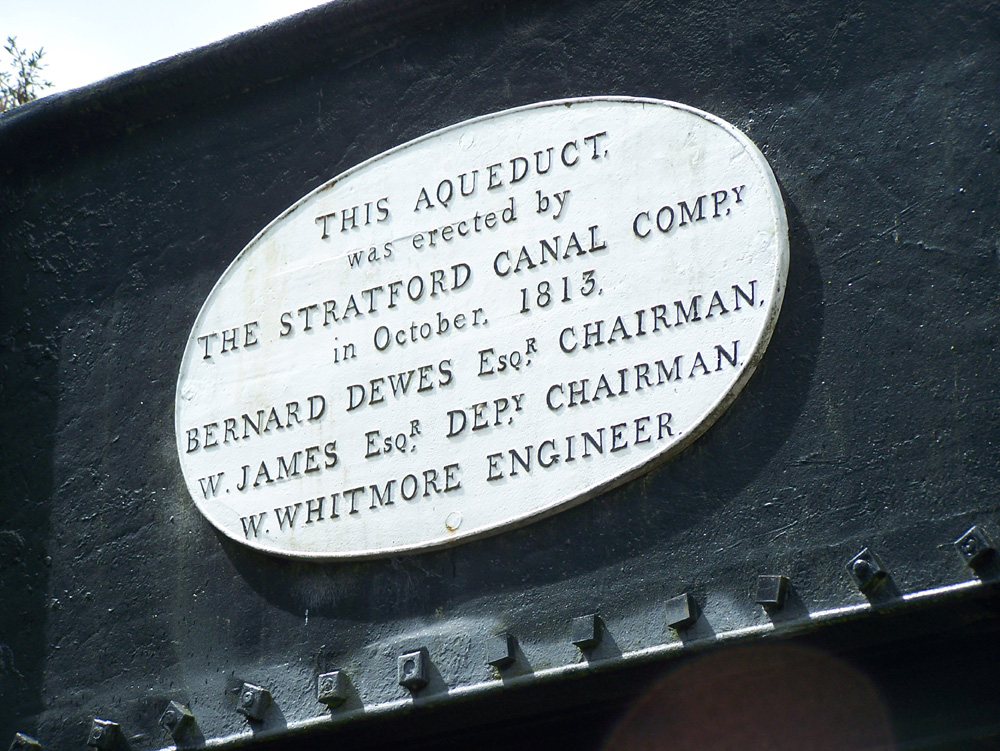 In former times, the driver of a rumbling heavy wagon pulled by two or four shire-horses would have had ample leisure to read the cast-iron inscription on the aqueduct – assuming only that he was literate, or not asleep. It is an increasingly little-known fact that horses who do a regular ‘run’ can do it perfectly well by themselves, thank you very much. So if the driver nodded off, it didn’t really matter. I learned this as a child, watching the horse-drawn milk float going up our street in Wolverhampton, ca. 1948. The horse & float came round the corner by itself, and stopped on the left-hand side. Presently the milkman himself walked into the street and began to deliver new bottles & collect the empty ones from each house. Presently (without any command) the horse ambled off up the street, this time stopping on the right. Same thing; the milkman deposited the empties, got more full bottles. Then the horse would go (by itself) up to the top of street and stop on the left. Needless to say, there were no cars parked in that humble sort of street in those days – nobody who lived there could afford one. In these modern times, anyone attempting to read a plaque while driving a car would undoubtedly perish within a few seconds. It therefore gives me an almost unreasonable amount of pleasure to reproduce it here, in case you have ever driven under it and wondered what it said. 8^)