 17th December 2012. About 120 miles to the south of Lichfield is the fine city of Bath. We had never visited it, so made good the omission. One cannot possibly describe this city, let alone the huge Roman complex around the sacred spring, which must have been a focus of wonder and awe for thousands of years. Mineralised water comes out of this spring at about 45 °C, and at the rate of about 240,000 gallons a day. The flow-rate is unchanging. Much of what you see around this main pool is relatively recent restoration; the true glory lies underground, where excavations, rooms and archaeological finds are wonderfully displayed. Go to http://www.romanbaths.co.uk/ , and click the ‘Walkthrough’ tab.
 The head of Medusa-type being. It is quite large.
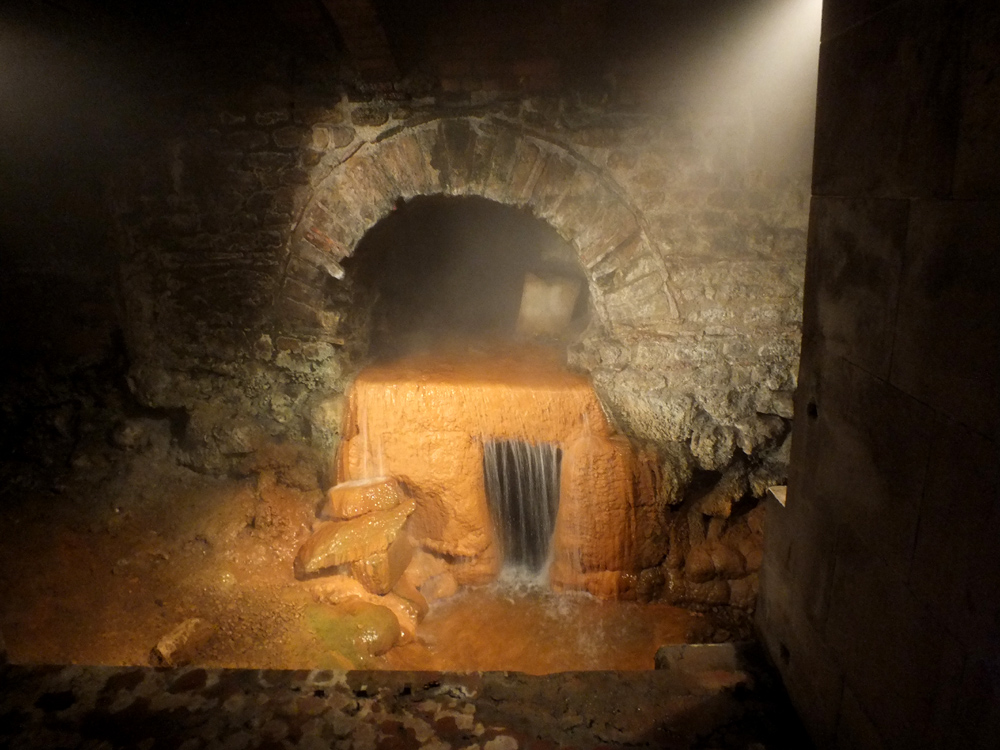 The outflow from the Sacred Spring; it passes from here into the main pool.
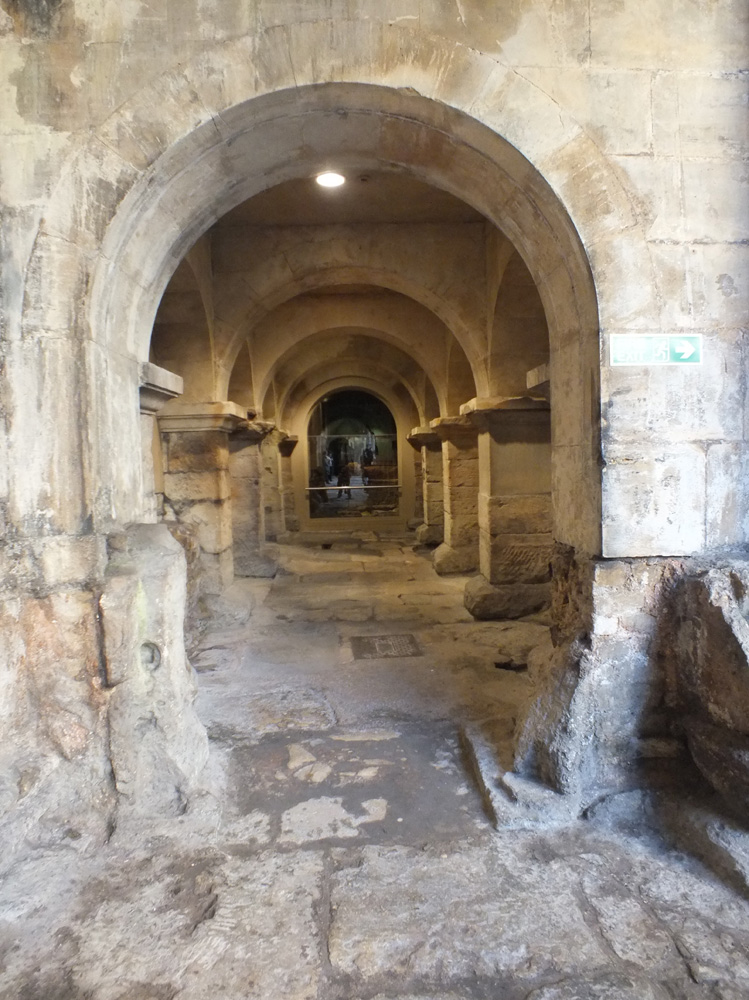 All the people who must have walked down this now-restored passage over the millennia; what did they think? What did they believe? What were their aspirations? In the more recent 18th Century times of the Spa at Bath it may simply have been ‘I hope my gout will get better if I drink enough of this foul-tasting water’. * In Roman times they may well have said the same thing; but in addition, many little sheets of lead have been found. It was common to write a grievance to a god or goddess with a stylo on a thin sheet of lead, and throw it into one of the pools. Things such as: ‘I, Flavius, pray that the person who stole my woollen cloak (or best boots, or my new wristwatch &c.) shall be utterly accursed, and die in a most unpleasant fashion’. If this punishment seems a bit extreme – surely Flavius would have been quite happy if Marcellus gave him back his cloak and a couple of silver denarii by way of compensation? – we must bear in mind either that (a) those were simpler and more vicious times; or that (b) not everybody really believed that Sulis Minerva (an interesting composite Romano-Celtic Goddess, and seemingly the Tutelary Deity (I’ve always wanted to write that phrase!) of the Bath Temple) would, or indeed could, bring the requested Doom upon the miscreant. Perhaps it was just a satisfying way of venting one’s wrath? H’mm. There is much food for thought there, within my limited mental compass, of course.
* As regards the taste of the water, no matter what it may have been like in the heyday of Beau Brummell & Co. in the 1700s, it is today absolutely forbidden to bathe in or drink or even to touch the water. It is contaminated with an exceptionally unpleasant amoeba, Naegleria fowleri, which can cause a rapid and very fatal type of meningitis. It may seem inconsiderate of me to include this appalling fact in this otherwise light-hearted Diary; but I make no apology for doing so, and for obvious reasons!
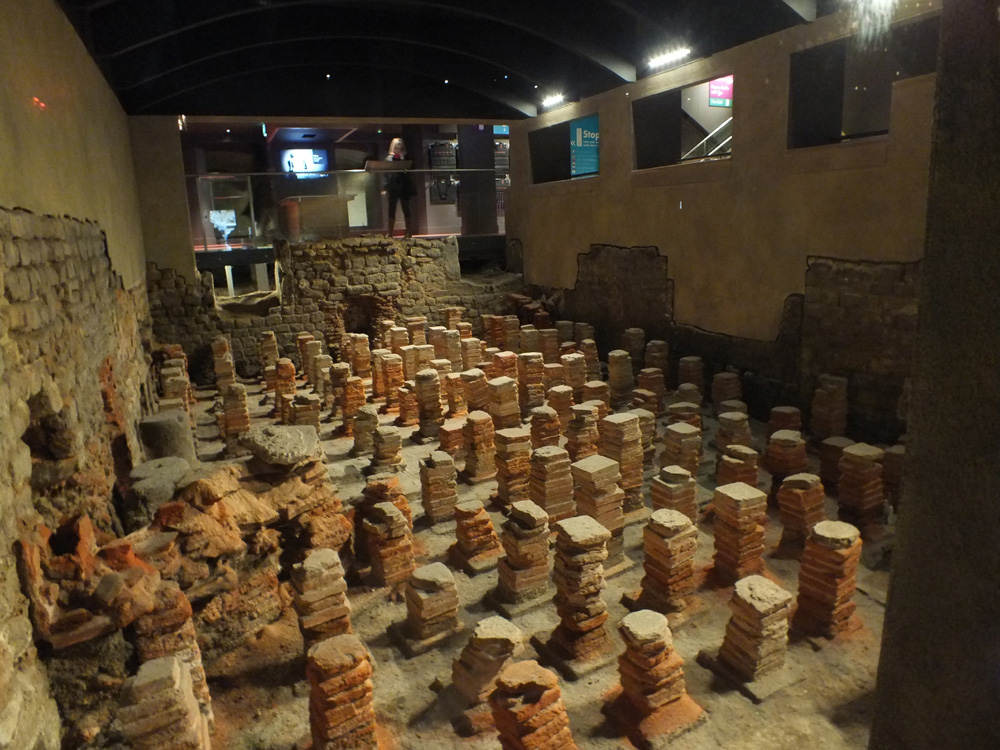 Underfloor heating nearly 2,000 years ago – the floor rested on the piles, and the combustion products of a fire passed through the space. I actually said to myself: “You’ve seen one hypocaust, you’ve seen them all…”, but came unstuck almost immediately. Just a few days later we saw a photo of a hypocaust in south-eastern Europe that did not have piles of tiles like these (and most hypocausts in Britannia, I think?). Instead it had pottery cylinders with a socket on one end and a tenon on the other, which fitted together like Lego, so you could build a shallow hypocaust or one twice as deep! I was duly contrite.
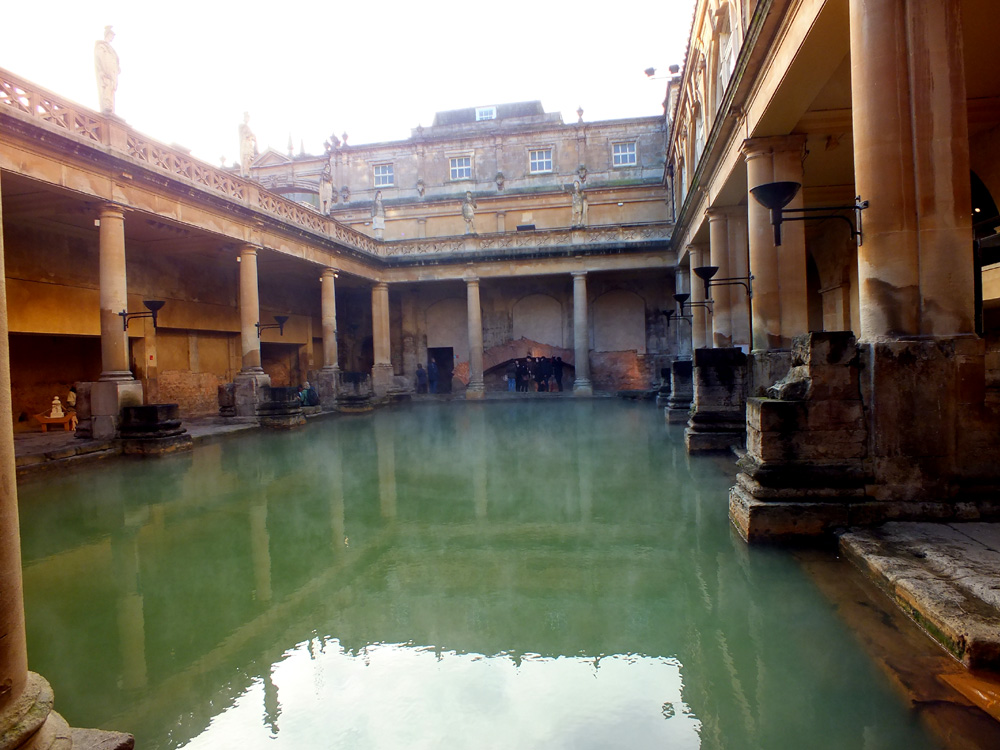 The main bath from the lower level. We shall certainly come here again! But not even touch the water…