 7th February 2012. A cold day; the maximum temperature was 2° C. But, as yet again we had sat in front of a PC monitor for two solid days, it was essential to get out of the house. But it is also essential to have a definite purpose in mind, rather than just to go out and mooch about getting cold. Bearing in mind our free local travel pass, which extends to Coventry in the south east, Walsall in the north and Wolverhampton – where I was born & spent the first 9 years of my life – in the north west. Accordingly, the decision was made to go to Wolverhampton and have a bacon sandwich in a little café we know in the town – sorry! – City Centre; for Wolverhampton has been a city for some years. But: it also occurred to us that we have never visited the Birmingham Catacombs… So they would be our first stop! On the ’bus into the centre of Brum, and then to walk to the Jewellery Quarter, where is the cemetery with the catacombs. This is Cornwall Street, just behind the Council House. Birmingham is not noted for its buildings, but these are rather nice. On the left is the Birmingham & Midland Institute, and on the right is now part of Birmingham City University – originally, the Birmingham College of Arts and Crafts, dating from the 1880s.
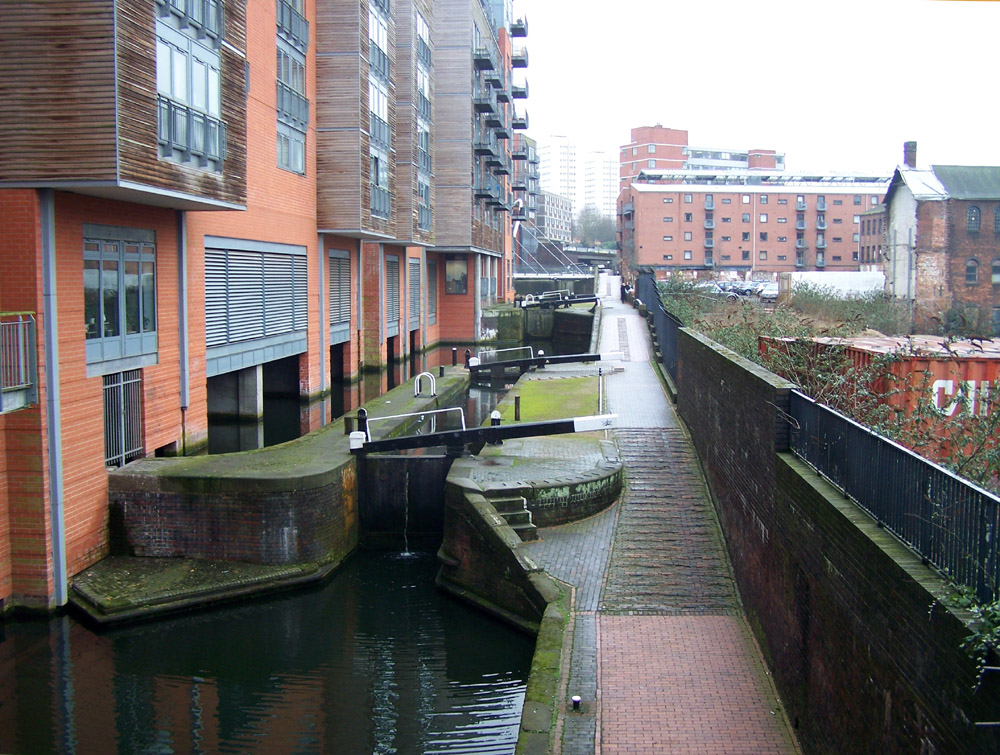 Next, we go down Newhall Street, crossing the canal. Here is a view up part of the Farmers Bridge flight of 12 locks.
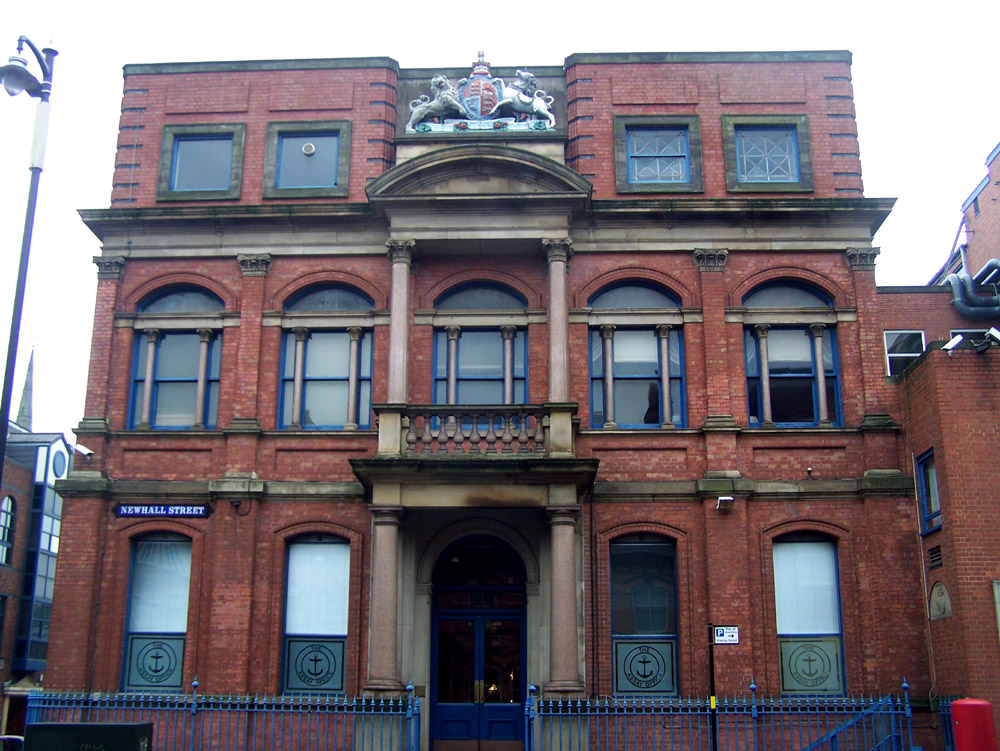 And on the other side of the road, the Birmingham Assay Office, where precious metals are hall-marked. It was founded by an Act of Parliament in 1773. Before that, I believe, silver & gold items made in Birmingham had to be sent to Chester (over 70 miles away) as that was then the nearest Assay Office. It has been at this location since 1877. We were surprised – and gratified – to learn that this Assay Office is the busiest in the world: in 2006, over 12 million articles passed through this building. The Birmingham Assay mark is an anchor – as you can see from the lower windows – yet Birmingham is nearly as far away from the sea as anywhere in the UK. It came about because Birmingham and Sheffield, believing in ‘strength in numbers’, jointly lobbied in London for a local assay office, and the people who went, stayed at an inn called the Crown & Anchor. Guess what Sheffield’s hall mark is? 8^) Well; that’s the story, & it’s such a pretty one, I really hope it’s true!
 Next, through St. Paul’s Square. I think this area was grievously threatened by the re-developers years ago, but happily was preserved largely intact.
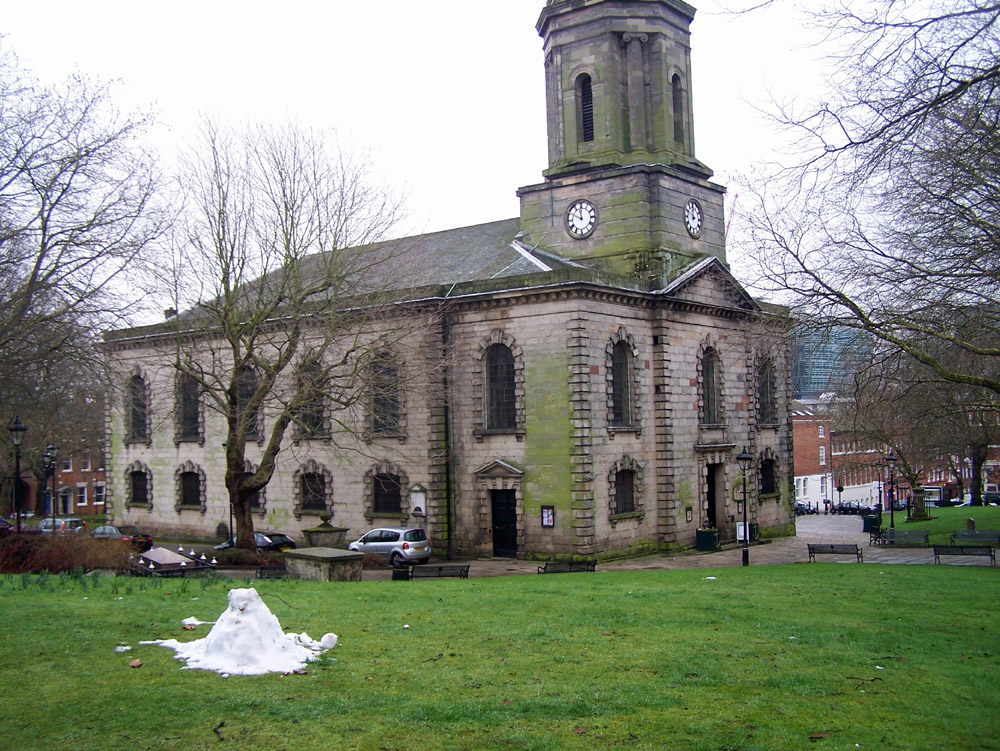 I would not pretend that St Paul’s Church itself is a building of staggering beauty – but who are we to ‘back-dictate’ what buildings (or anything else for that matter) should have looked like when they were first put up? In this case, it was consecrated as St. Paul’s Chapel in 1779. A snowman slowly wilts in the foreground.
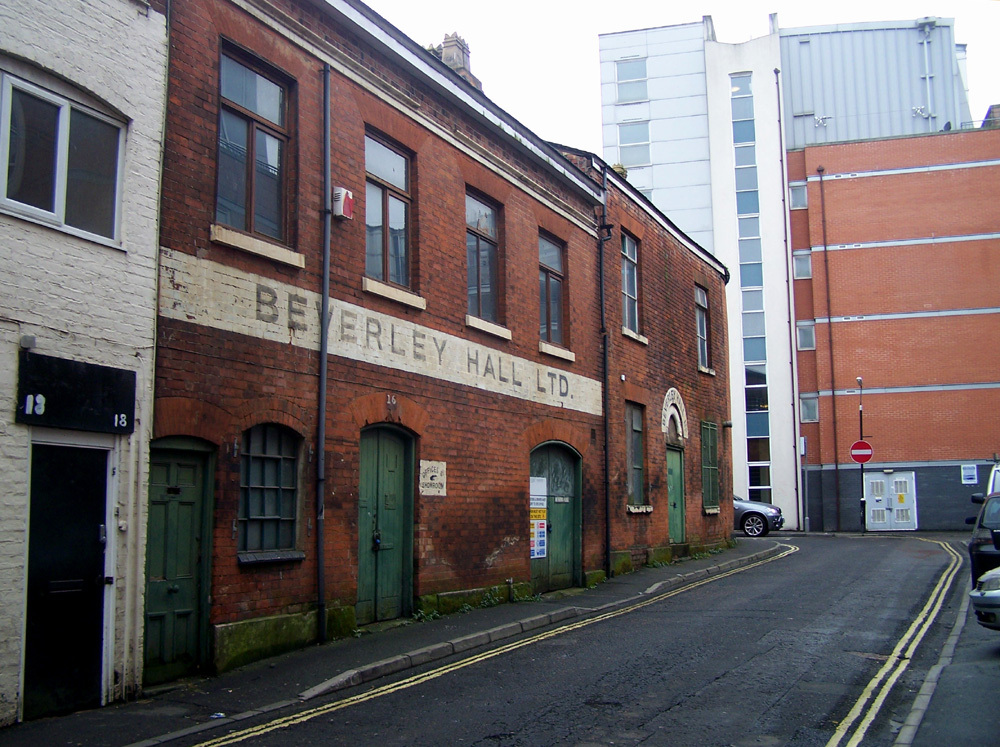 As we get into the Jewellery Quarter itself, there many old survivals contrast with the stark and utilitarian buildings which surround them. This neglected factory is one. Having said that, the upstairs windows have been renewed…
 And another superb old building, but this one fully-functional still! (Alas, no longer…)
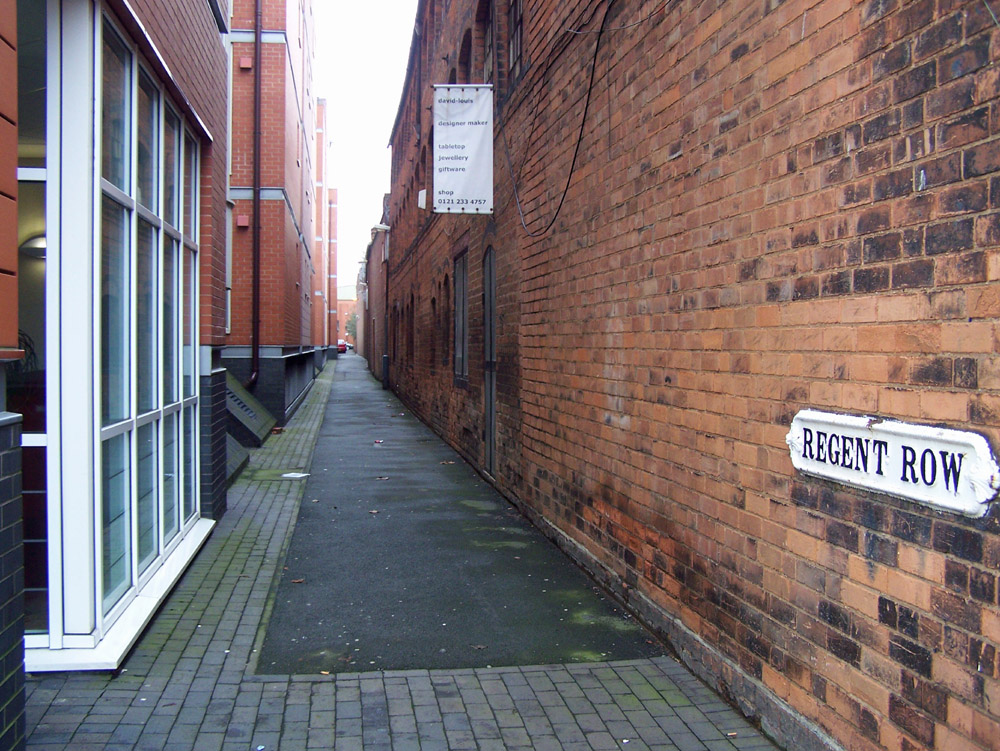 And here, perhaps because of some ancient right of way, a long passage has been suffered to remain between a new building and old ones.
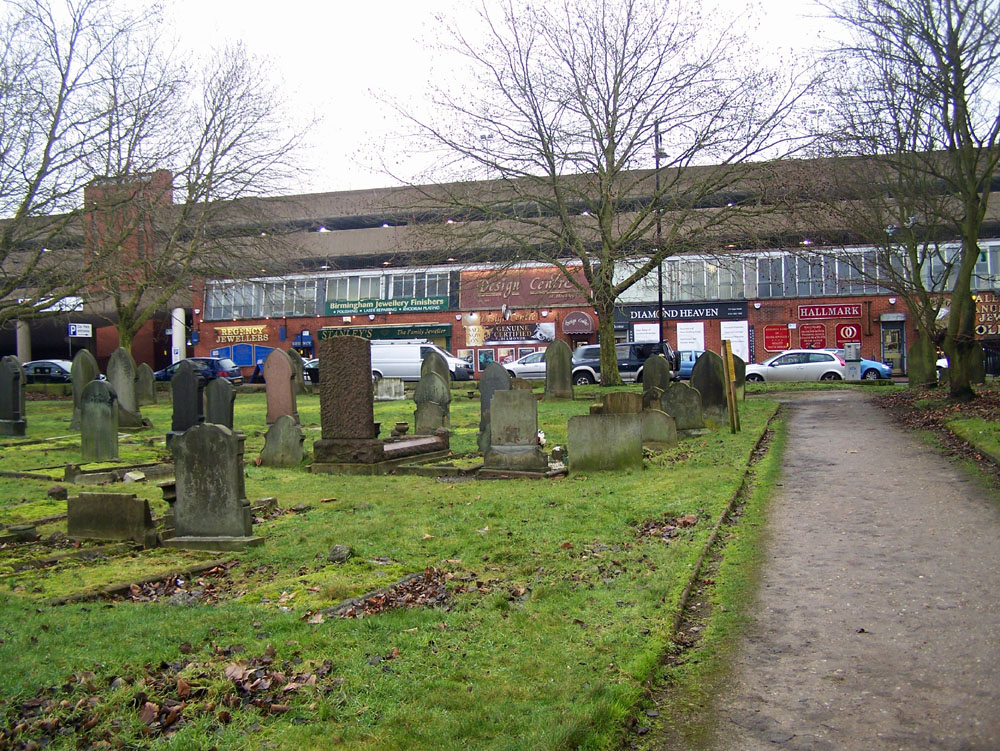 At last arriving at the edge of the Warstone Lane cemetery, we find that it contrasts oddly – discordantly, in fact – with the new building on the other side of the road, containing many brightly-lit shops & high-pressure outlets for jewellery. But then, it is inevitable that the present and the past must have an interface somewhere; and that such an interface is often uneasy. Still, our destination is the past, not the present – so let us proceed…
 It is with some shame that we confess we have known about the Catacombs for many years, but never visited them until today. Very well: let our chilled, numbed and fumbly fingers, as we awkwardly try to press semi-microscopic buttons on the camera, remind us of our omission. This cemetery was privately opened in 1848, as the churchyards in the centre of Birmingham were impossibly overcrowded (there were only two in any case). An outcrop of sandstone allowed these tombs to be excavated back into the sandstone. They were tenanted by the departed of the more exalted classes, as they were expensive.
 Still, expensive as they may have been, they were commodious, evidently going back some way into the sandstone escarpment. And thus, a relatively large number of the departed could be housed in a single tomb. When they fell out of use I don’t know; you can find plenty about them on-line. But it must have been well before 1939 and World War II; because, it is averred by those who know, that some of these Catacombs were used for temporary housing of citizens of Brum who had been unlucky enough to have their houses destroyed by German Air Raids.
 The cemetery above was confined to those of the Anglican faith; but the neighbouring and larger Key Hill (Hockley) cemetery, separated only from Warstone lane by the old Great Western Railway line, admitted Nonconformists. There are Catacombs in Key Hill cemetery too, as illustrated above. They are most if not all excavated in the same sandstone outcrop. Quite a few of my own forebears are present in this cemetery, as my father’s family lived in Park Road, Hockley, very close by. Though I doubt that any of them aspired to a catacomb. Memo: More research to be done.
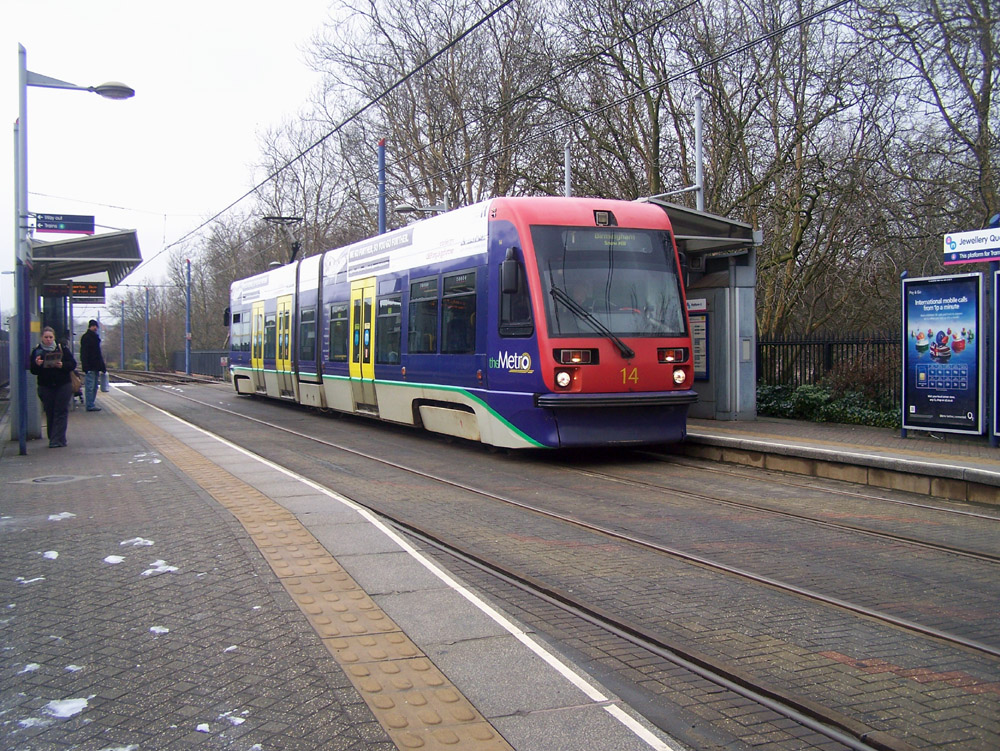
And here is that very same old Great Western Railway route, looking towards Birmingham from the Jewellery Quarter station. Now this is a dual station; you see here the Metro side of it – which is a tramway. To the right is the actual railway station. The Metro is without doubt one the great recent innovations in local transport, and has been a great success since it opened in 1999. It runs from Birmingham to Wolverhampton. Mostly along the old GWR route, but comes onto the roadway (the A41) near Wolverhampton. Here is a tram bound for Birmingham Snow Hill station. Ours will arrive in a couple of minutes, and transport us in the opposite direction, to Wolverhampton. (See also Wolverhampton).