 7th September. Weather much improved – not a cloud in the sky, so off to the small & peaceful village of Deerhurst, a few miles from Tewkesbury in Gloucestershire. Not just for a nice couple of hours of fresh air; for there are two ecclesiastical establishments there well worth a visit. Indeed, Deerhurst is practically the only place to have two Saxon churches! Here you see Odda’s Chapel.
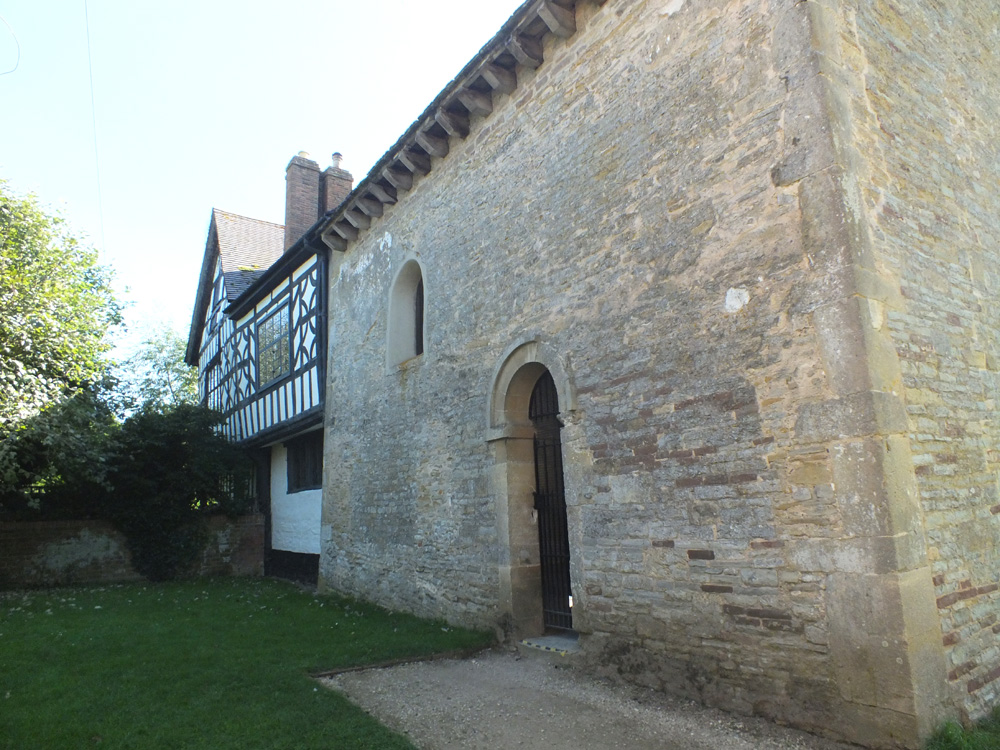 As we shall see, it was consecrated in 1056. Later, it was ‘lost’, when the half-timbered house was built against it in the 17th century. The chapel was literally absorbed into the house, and I believe the whole affair was over-clad, and as the house entered a period of decline, it just became a rambling structure. In 1865 the house was completely restored, and the chapel ‘re-discovered’; eventually to be restored. However, the existence of the chapel had been known since 1675 when an inscribed stone was found nearby. A copy of it is present in the chapel:
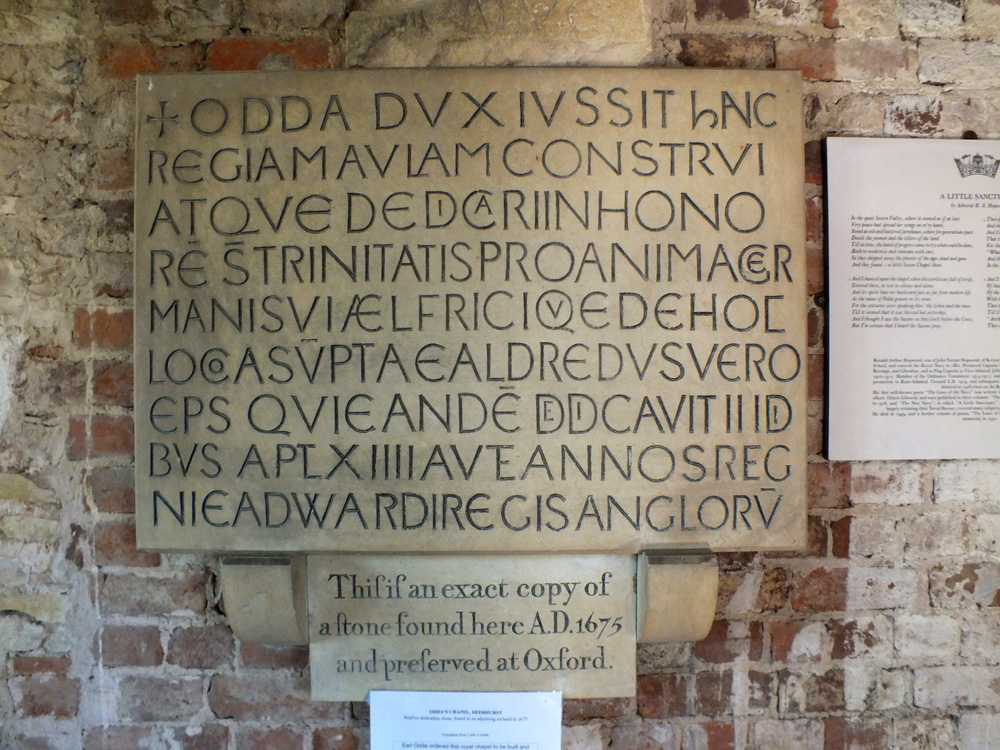 It is the original plaque of dedication of the chapel although of course, what you see here is a copy. Being a blithering idiot, I have accidentally deleted the photograph of the translation on the piece of paper seen at the bottom, which rather defeats the object of my new camera, which will take quite good shots in low light. Happily, there is a translation on the English Heritage web-page concerning the chapel, viz. ‘Earl Odda had this Royal Hall built and dedicated in honour of the Holy Trinity for the soul of his brother Aelfric, which left the body in this place. Bishop Ealdred dedicated it the second of the Ides of April in the fourteenth year of the reign of Edward, King of the English.’ That monarch was of course Edward the Confessor, who reigned 1042 – 1066. See more at: http://www.english-heritage.org.uk/daysout/properties/oddas-chapel/history-and-research/
(Note added December 31st 2019. In 2018 I visited the Ashmolean Museum, and yes, you guessed it: the original ſtone is ſtill preſerved at Oxford – in the Ashmolean Museum of courſe. To ſee the original ſtone, click here.)
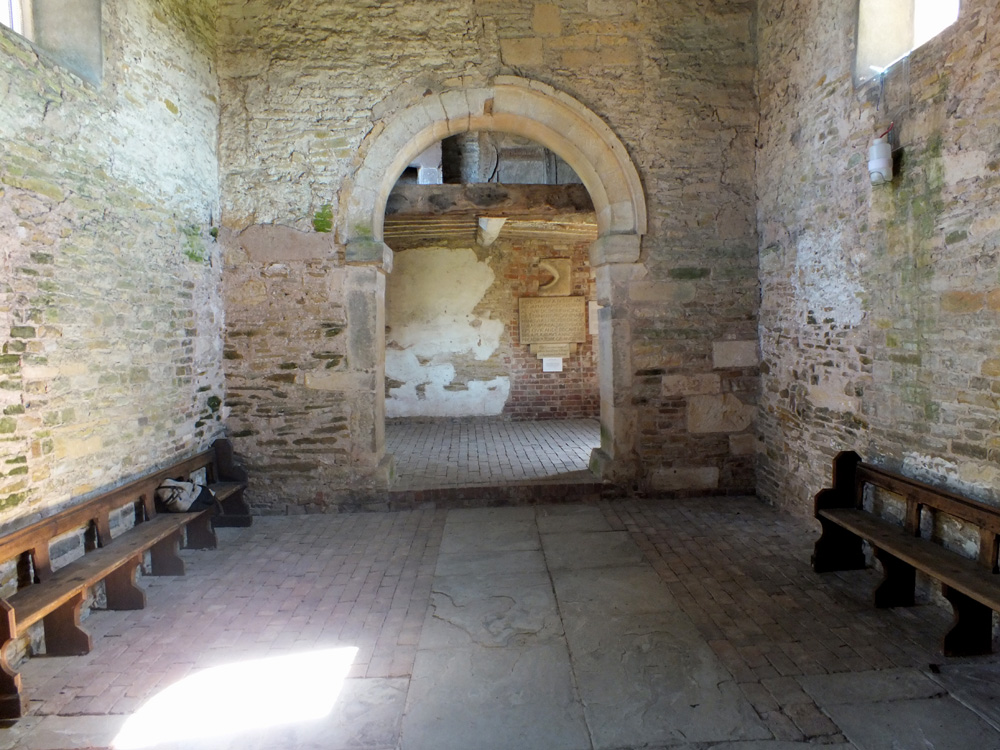 The building is narrow but very tall – this in itself is diagnostic feature of Anglo-Saxon churches and chapels, isn’t it? On this fine sunny day, it had a lovely atmosphere. It would undoubtedly have a ‘good’ atmosphere even on a bleak winter’s day, but of another sort. As for Earl Odda, he died less than 6 months after the dedication of the chapel to his brother; and following the Norman Conquest in 1066, his lands were assigned to a monastery in France. Inevitably, practically all the lands held by Saxons were taken over by the incoming Normans. But it should not be thought that perhaps hundreds of thousands of ‘Normans’ came to reside in England. If I’ve got it right, they came in as a relatively thin layer – but naturally at the very top of the hierarchy. Much the same as after the Roman conquest of Britain a thousand years before. There was then no vast influx of ‘Romans’ from Italy – probably just a relatively small ‘top layer’ of administrators, high-ranking army officers, merchants &c. In fact, exactly the same as when the British ruled India for a long period – several hundred years after the dedication of this wonderful little chapel…
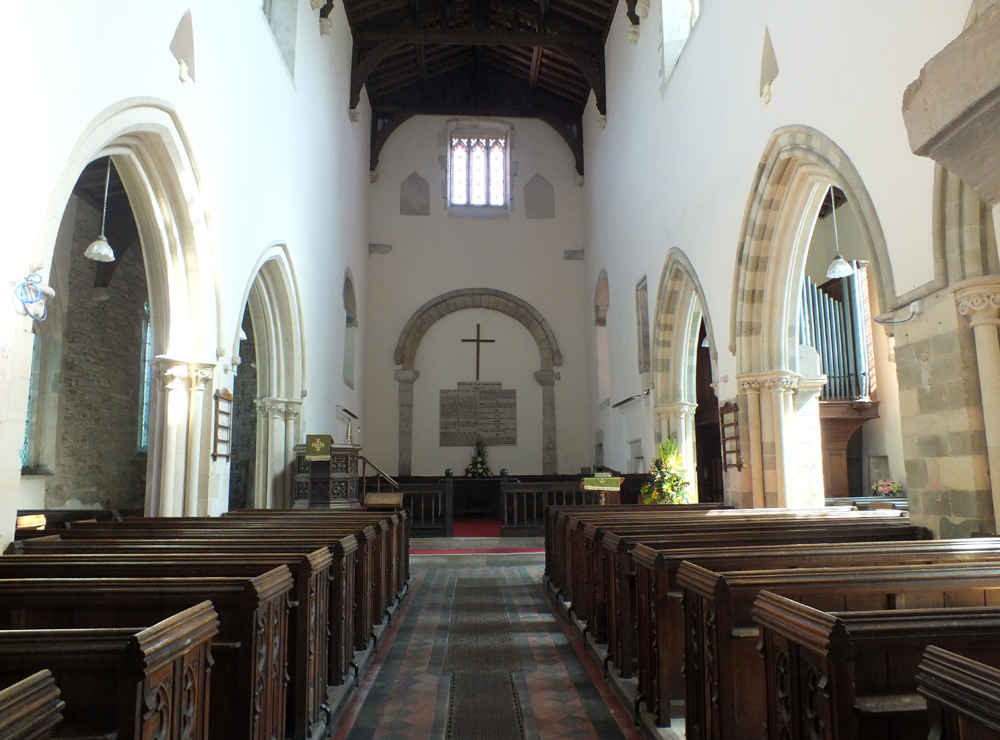 But the tranquil – indeed idyllic – village of Deerhurst has another and much older treasure: the Priory Church of St. Mary the Virgin. Its origins go back two hundred and fifty years before Odda’s chapel – not later than 804. A concise and excellent guide-book is available (ISBN 1 872665 39 X); but also see http://www.cotswolds.info/places/deerhurst.shtml We cannot have much idea of the first church that stood on this spot! But there are many reminders of the history of this place to be found.
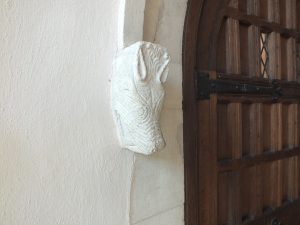
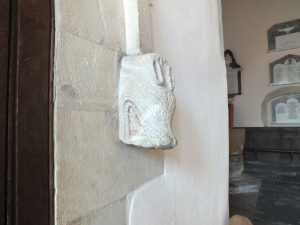
Easy to walk past, are these two beast’s heads, which now reside on the inside of the main door. They date from the 9th century, so were a probably part of the very earliest fabric of the church. Originally, they were positioned on the outside of the church door. Perhaps their initial function was discourage the entry of, shall we say, ‘undesirable entities’? At any rate, they were plastered over during one of the various periods of change and unrest in the practice of Christianity over the centuries. In the 19th century, the church was greatly ‘restored’, and the then Vicar, the Reverend George Butterworth, had the plaster removed, revealing the beasts. The right-hand one has some obvious colouring in its mouth – this is part of the original pigments with which they were painted. However much the Puritan and Victorian mind may have been induced to an austere Contemplation in a church devoid of colour and other unseemly distractions, we must not forget that centuries before, churches and their statuary were very brightly painted. Incidentally, it was the Reverend Butterworth who also made the discovery of Odda’s Chapel.
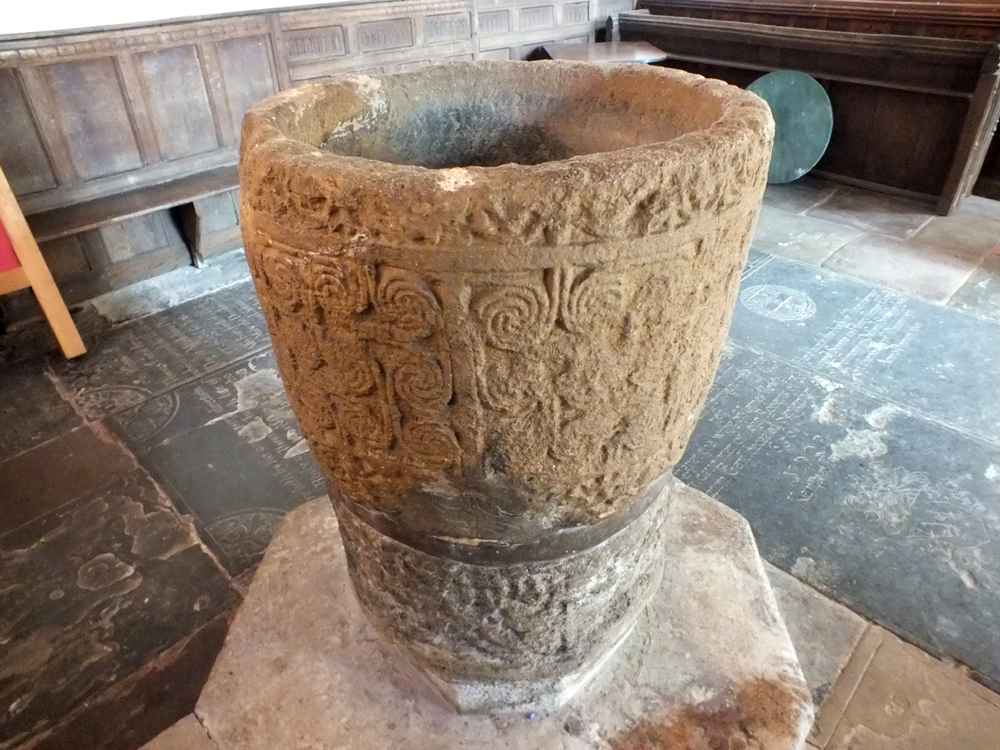 Another treasure is the Saxon font, reckoned the finest still in existence in this country. Almost predictably, it was recovered only a hundred or so years ago, having been presumably thrown out during the Reformation, & was being used as a drinking-trough for the animals on a nearby farm. It was reunited with its pedestal, which, by way of confirmation, bears the same decorative motifs. We left Deerhurst reluctantly, and will visit again; if you are near, please go there!