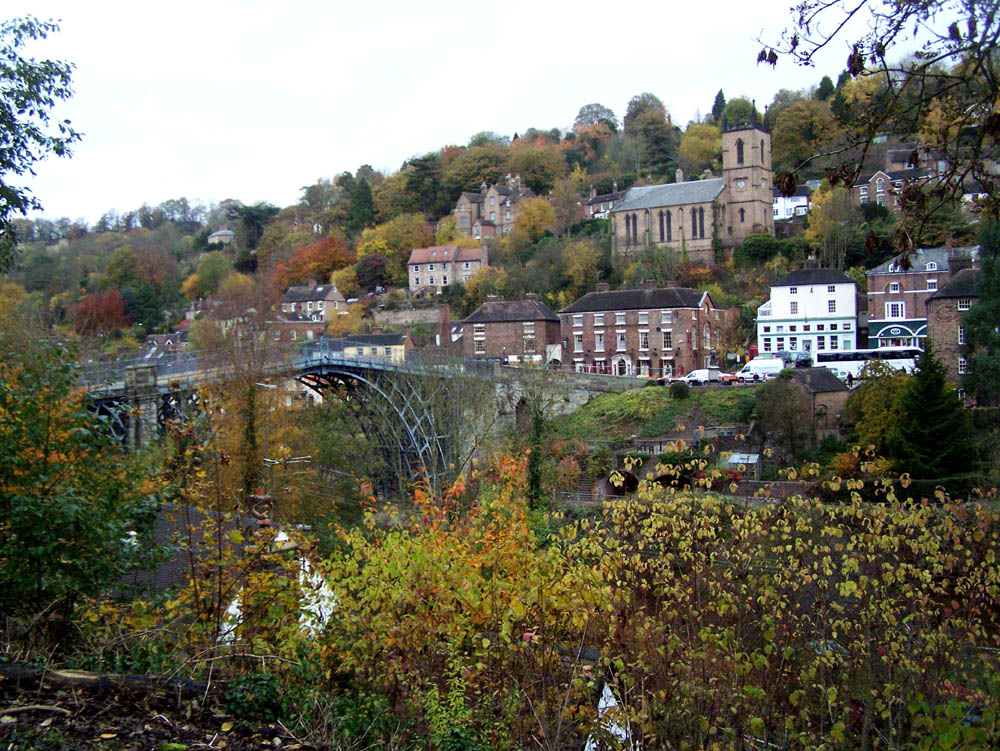
 2nd November 2010. A visit to Ironbridge, Shropshire (or Salop, as that county was long called). The picturesque situation of the town in the Severn Gorge, plus the pretty Autumn foliage creates an idyllic scene. But 200-odd years ago it would have been quite different! For Ironbridge was a centre of mining, furnaces and iron works in those days. Indeed, it may fairly lay claim to being the Cradle of the ‘Industrial Revolution’. You can read about it on-line, if you wish. The very name of the town was given by the bridge over the River Severn you see here. The ‘iron bridge’ itself.
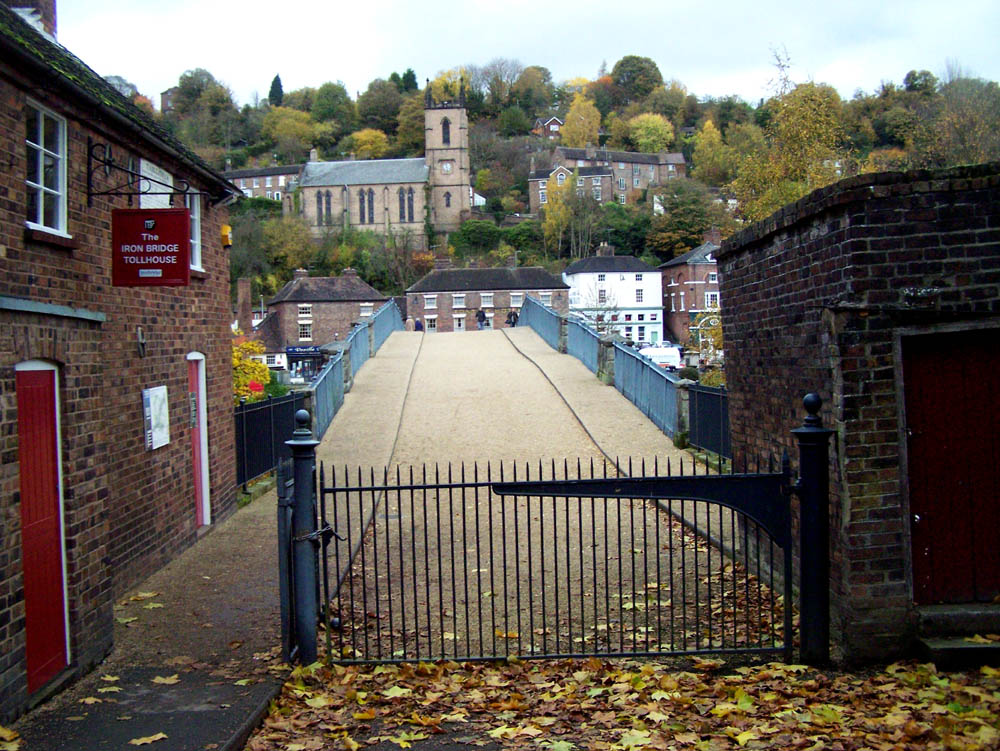 It is now closed to all but pedestrians, however. Here you see over the bridge, into the town, which lies mainly on the north side of the river. The Toll House is on the left. More on that later.
 Here is the bridge, in all its simple grandeur. It is the first iron bridge in the world, having been erected from pre-cast components in 1779-1781.
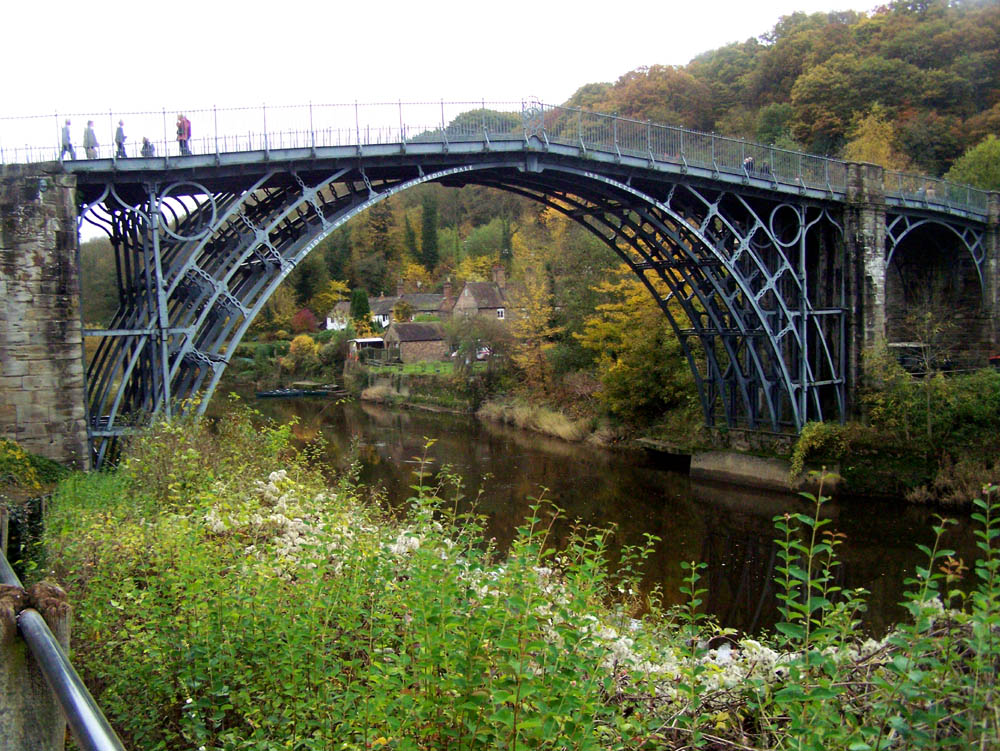 Here it is from upstream.
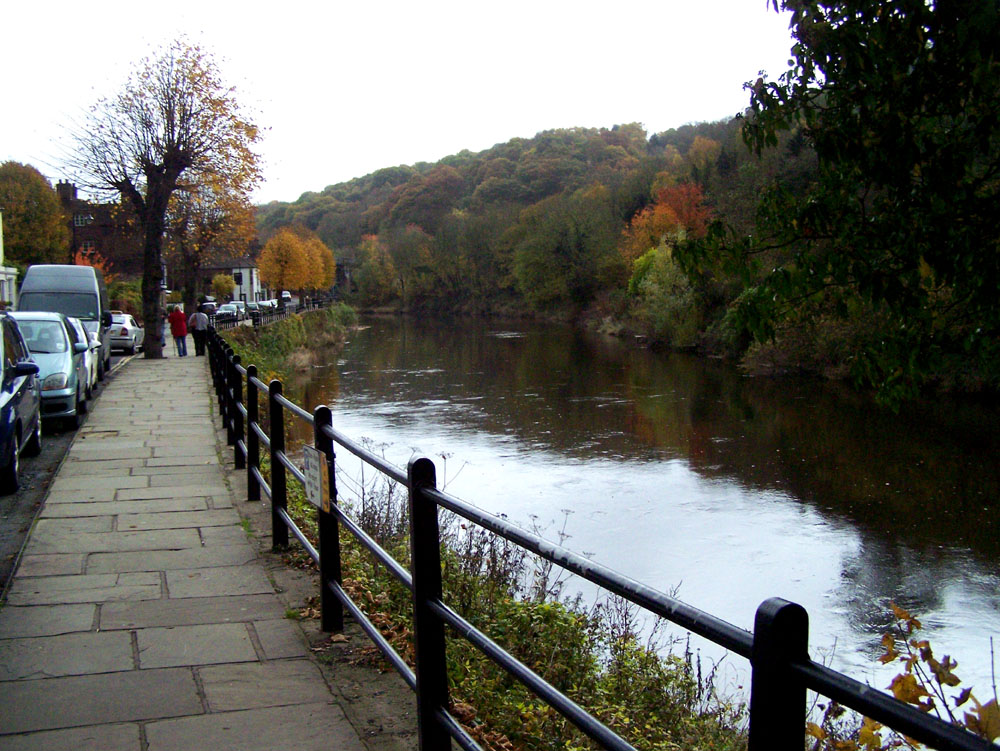 The River Severn in Ironbridge, a little further upstream.
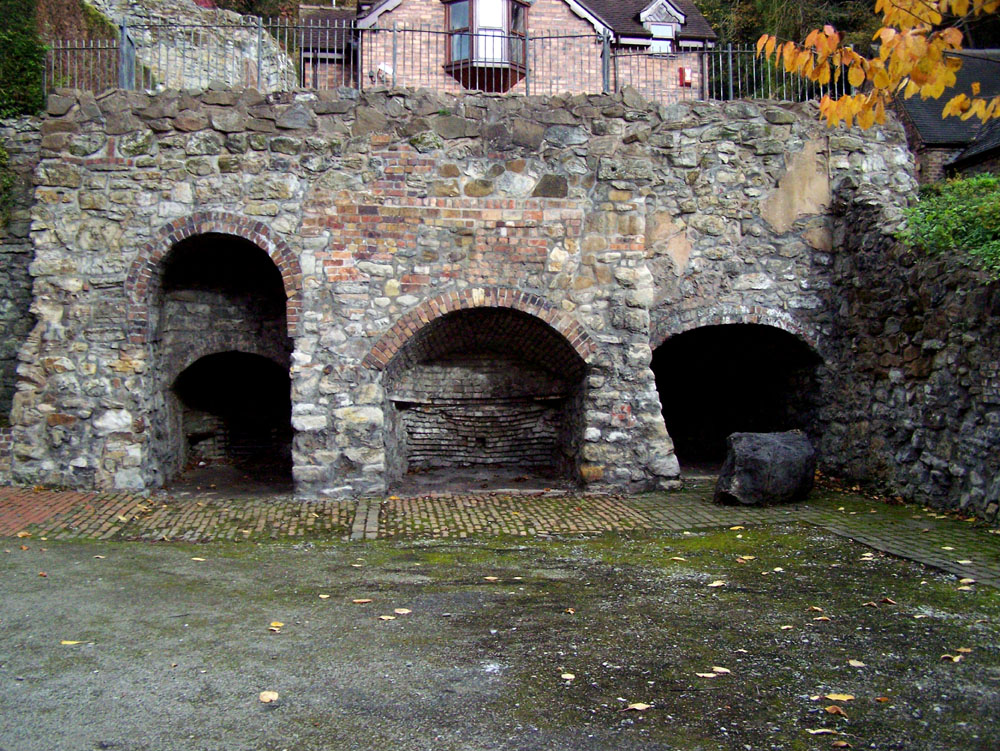 These are some old lime-kilns.
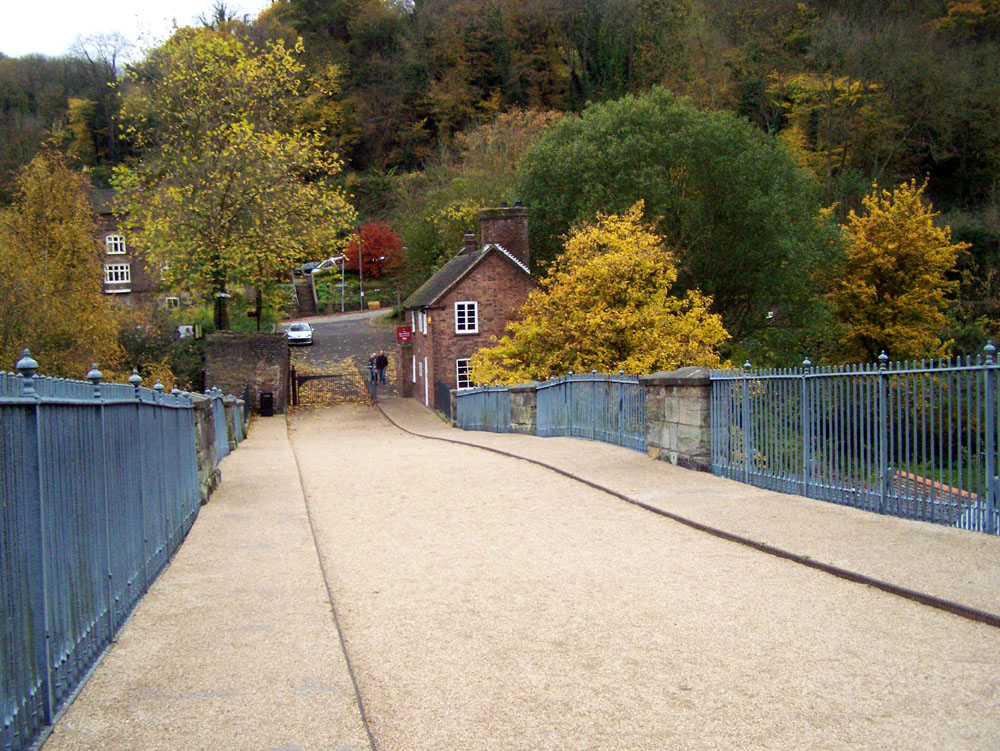 Looking back over the bridge, to the Toll House.
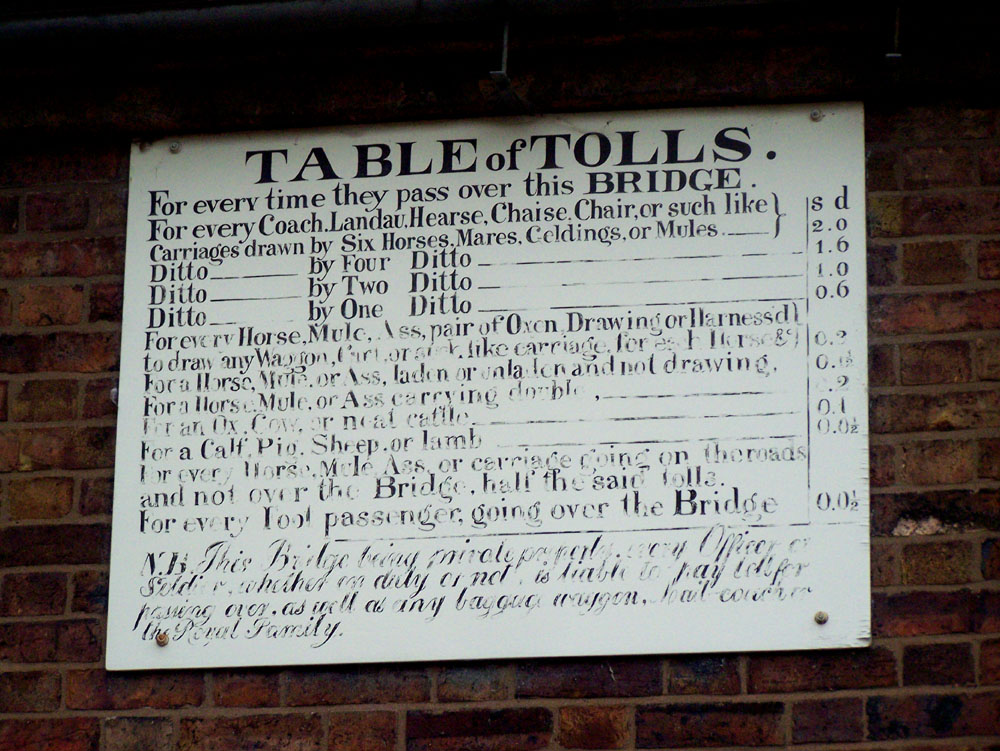 Here are the charges you had to pay to cross the bridge. They were enshrined in the 1776 Act of Parliament which was necessary to allow the construction of the bridge, and apparently remained fixed indefinitely. At least the notice itself must be later, because the ‘long s’ is nowhere used, as it surely would have been in 1781 when the bridge finally opened for traffic. Still, two shillings (10p) would have been quite a large amount to pay to get your carriage over; but then, if you could afford to have it drawn by as many as six Horses (or mares &c.,) then you must have been well off, so two shillings was probably neither here nor there. The last paragraph reads: “N.B. This Bridge being private property, every Officer or Soldier, whether on duty or not, is liable to pay toll for passing over, as well as any baggage wagon, Mail coaches(,) the Royal Family.” H’mm; those were evidently egalitarian times, when the rich in their six-horse carriage had to pay 24 times as much as a pedestrian, and even the Royal Family were not immune from the Toll! Parliament had spoken, and knew what it was talking about!