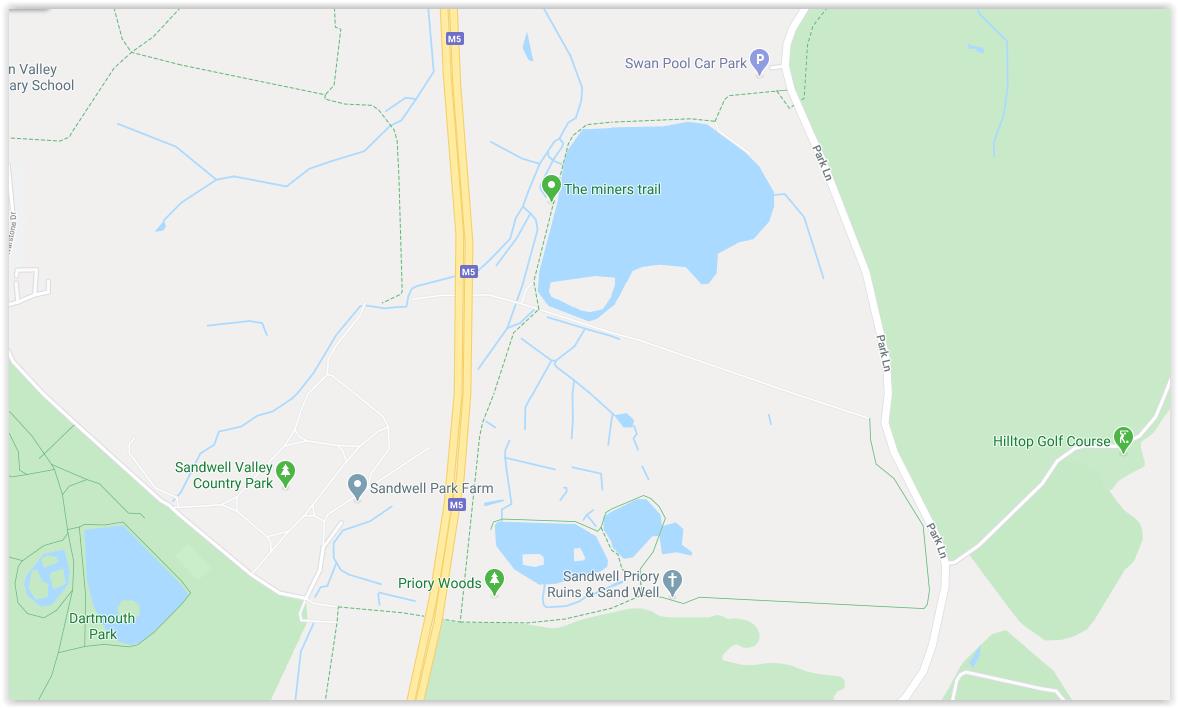
 Sunday 2nd August 2020. The section of the M5 motorway shown here is just south of its northern origin, from the M6. We are interested in the smaller area, below.

Above all, we wanted to see the Sandwell Priory ruins, and yet more so, the Sand Well istelf, which gave the whole area its name, and is allegedly still in full functioning order. You will know, that in early times, Wells and Springs were always regarded as valuable, special – and even enchanted; there are literally hundreds of Holy Wells, sacred Springs all over Britain, and everywhere else for that matter.
So, we drove north to Junction 1 of the M5, turned right, along the A41 towards Birmingham, and then left into Park Lane. You almost immediately lose the urban feel of the area as Park Lane weaves along the border of Sandwell Country park on the left, and the Hilltop Golf Course on the right. Eventually, you find the Swan Pool car park, and having paid a modest fee, (80p for a two-hour stay), off you go, in search of the Sand Well.

It’s almost exactly a mile from the car park to the ruins. You have to go down the whole length of the Swan Pool, which, as you can see, is quite large. We have commented before how diffiult it is to take a meaningful photo. of a huge expanse of water. It usually looks incredibly boring. However, by incoporating something of ‘frame’ on three sides of this image, we have made it more interesting (he said, complacently). 8^)
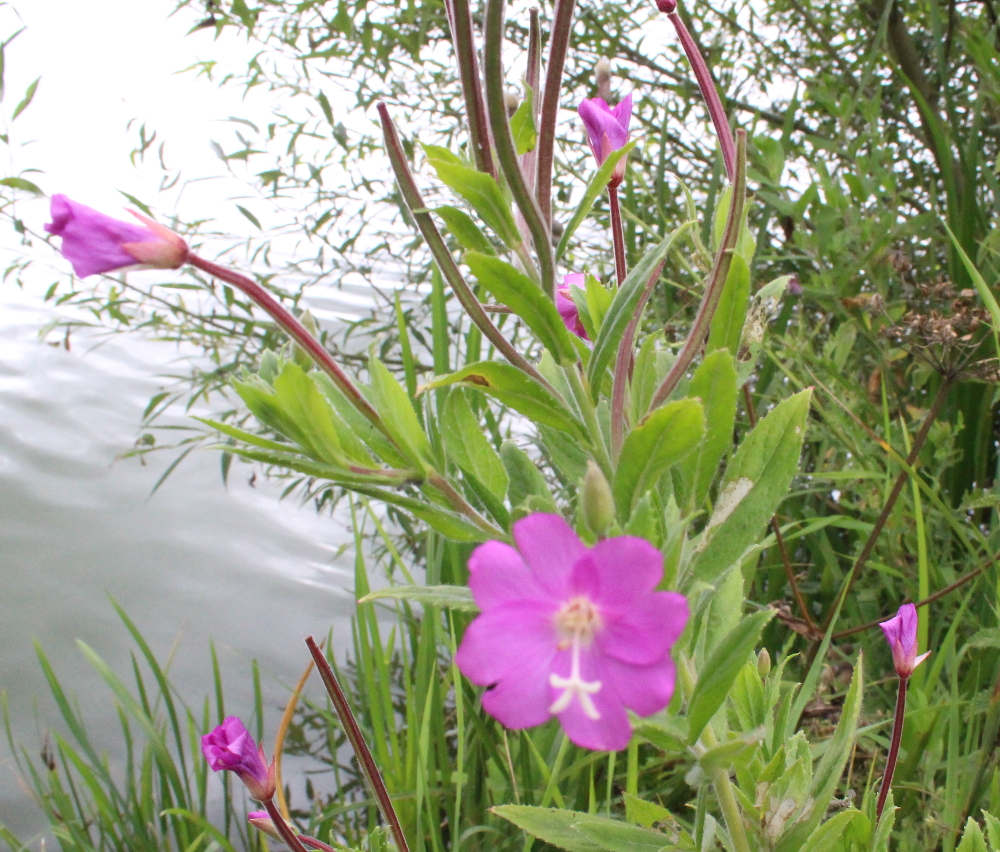 And there are many plants to try to identify! This one is Great Willowherb. At least PlantNet thinks so.
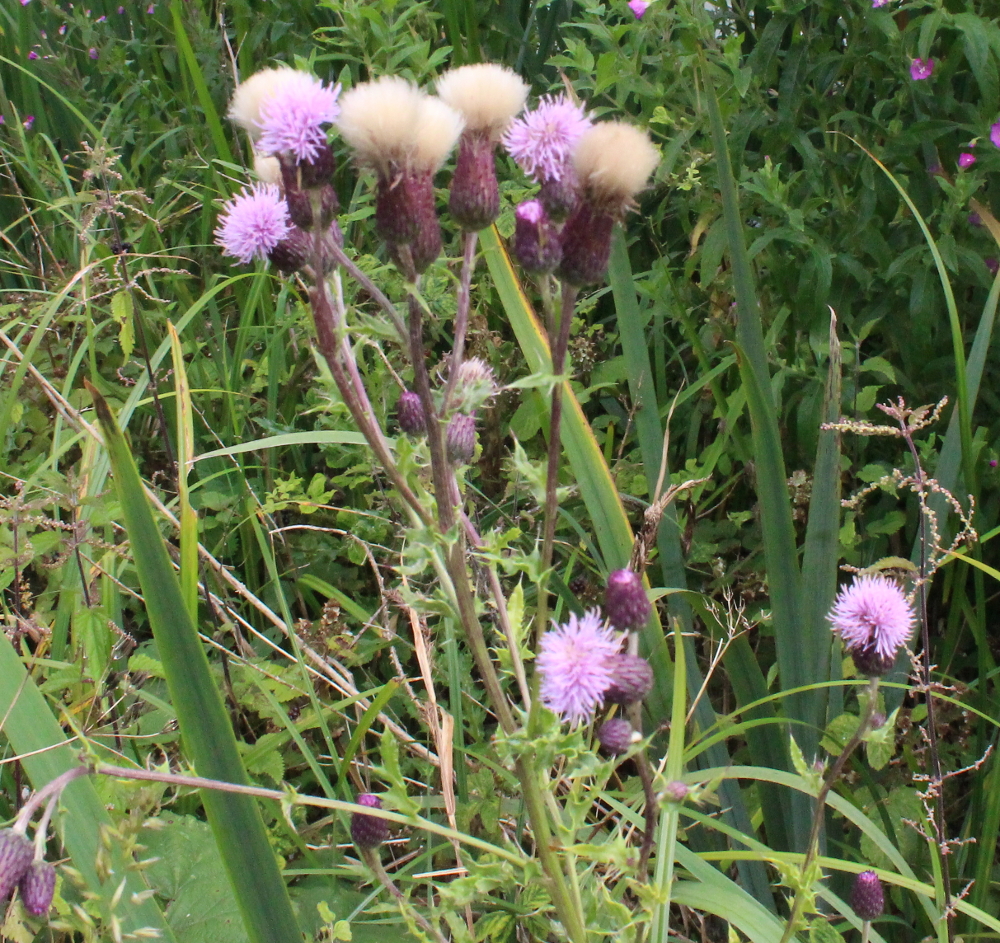 There are very many thistle species, but this is most likely Circium arvense, the Creeping thistle.
 PlantNet declined to identify this one, but there are many small yellow ‘traditional’ flowers like this…
 The problem here, is the background, which prevents the pale fronds in the foreground being identified.
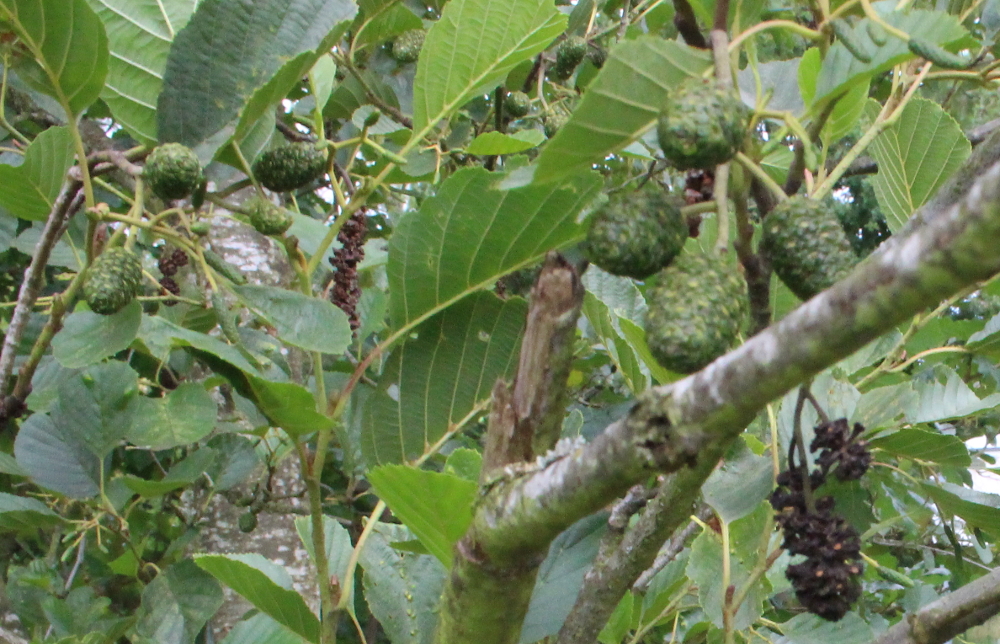 Fruit on a tree, readily identified as European Alder, Alnus glutinosa.
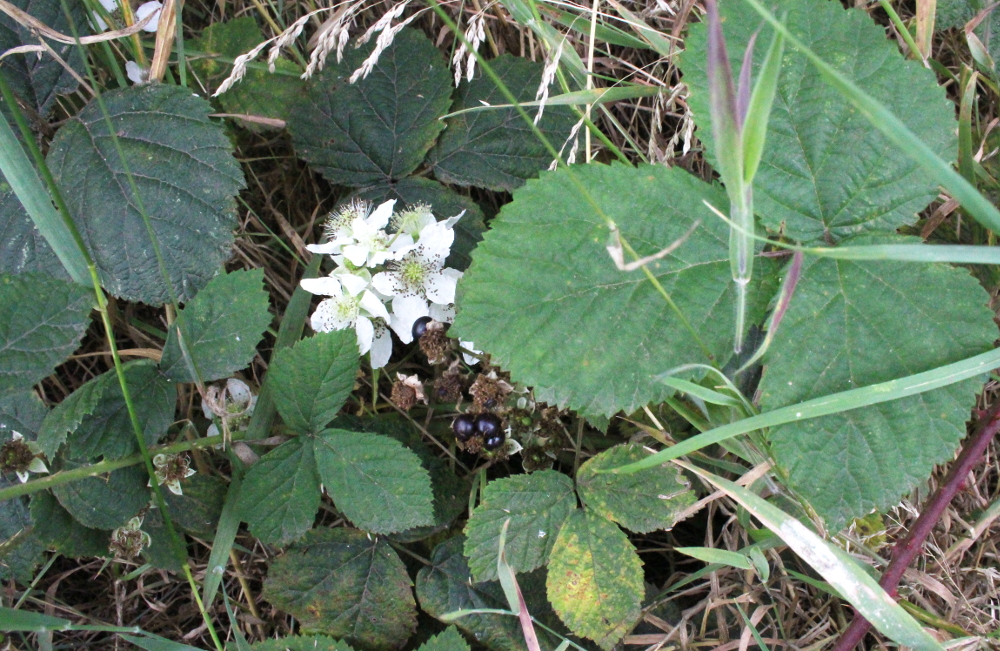
Even I know this is a Blackberry, Rubus spp. I just hadn’t noticed the tiny blackerry in the middle. To be honest, the ones in my back garden (I trained a presistent bramble up an abandoned trellis last autumn) are much superior. Indeed, this morning, having run out of fresh grapefruit, I had half a satsuma along with 15 or 20 blackberries from my modest garden. Yet while briefly sampling the life of a gatherer of nuts & berries &c., as was the case in the Old Stone Age, is rather fun, it must be said, the contemplation of doing it ALL THE TIME, especially in Winter, has absolutely no allure at all.
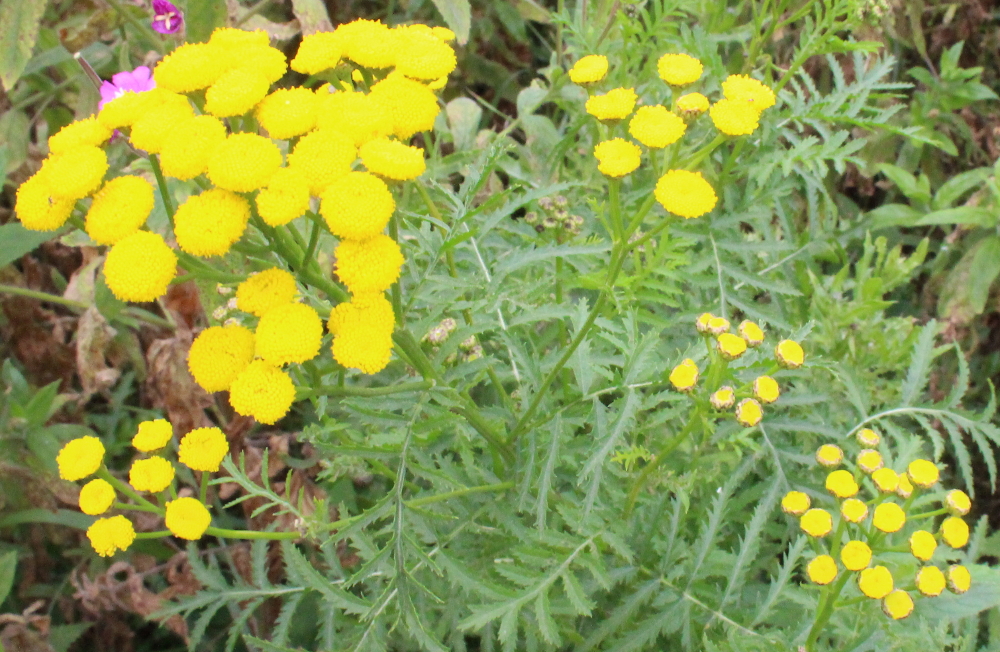 Tanacetum vulgare, the Common Tansy. I recall reading that this plant was used medicinally, but, usually only as a last resort, as its action could be violent &/or unpredictable?
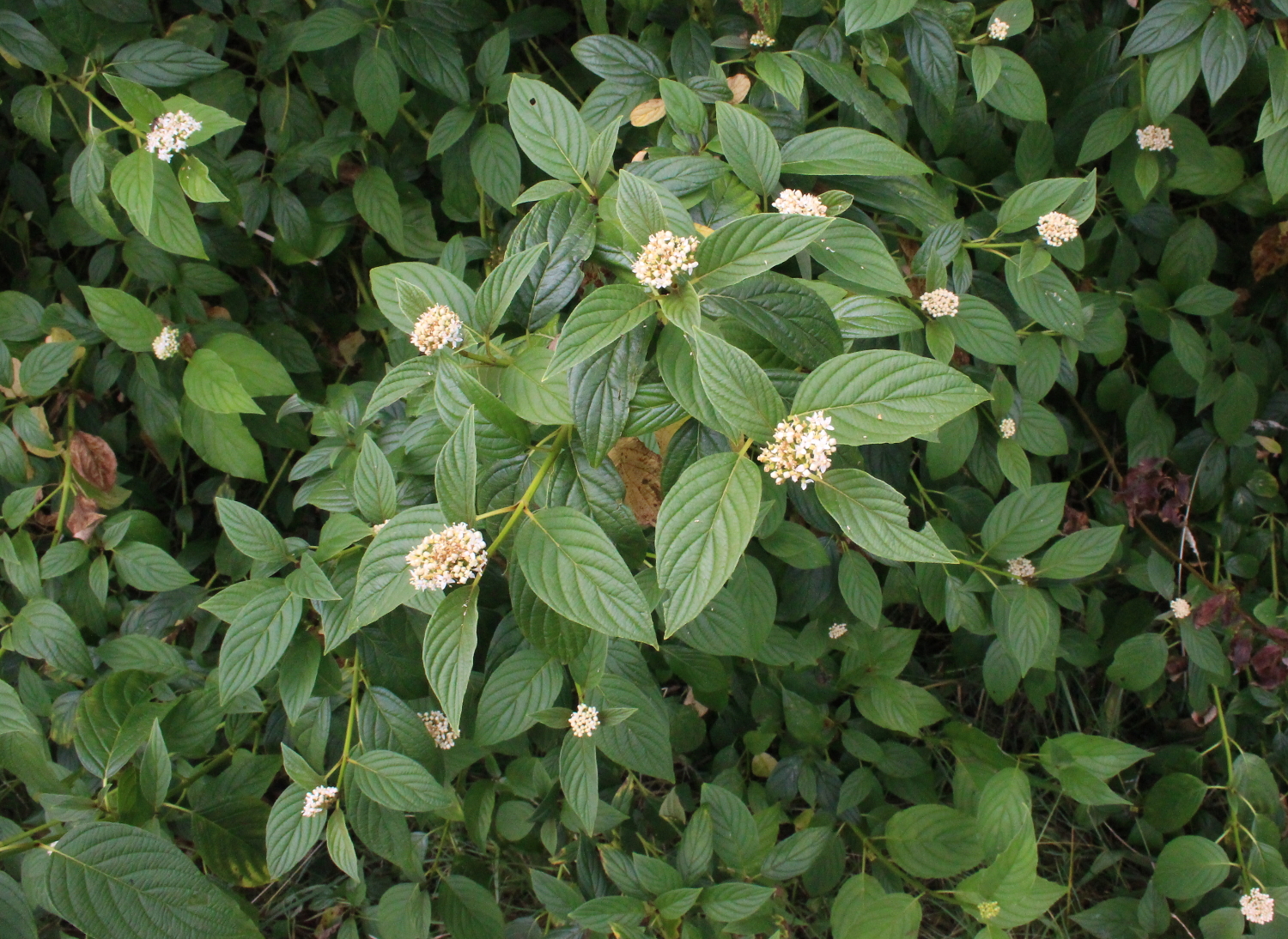 This one also beat PlantNet… It might be a flowering Dogwood?
 Even I know this is a species of Vetch – the leaves (pinnate is it?) as well as the flowers, proclaim that, loudly. Perhaps it’s just Vicia sativa, the common vetch?
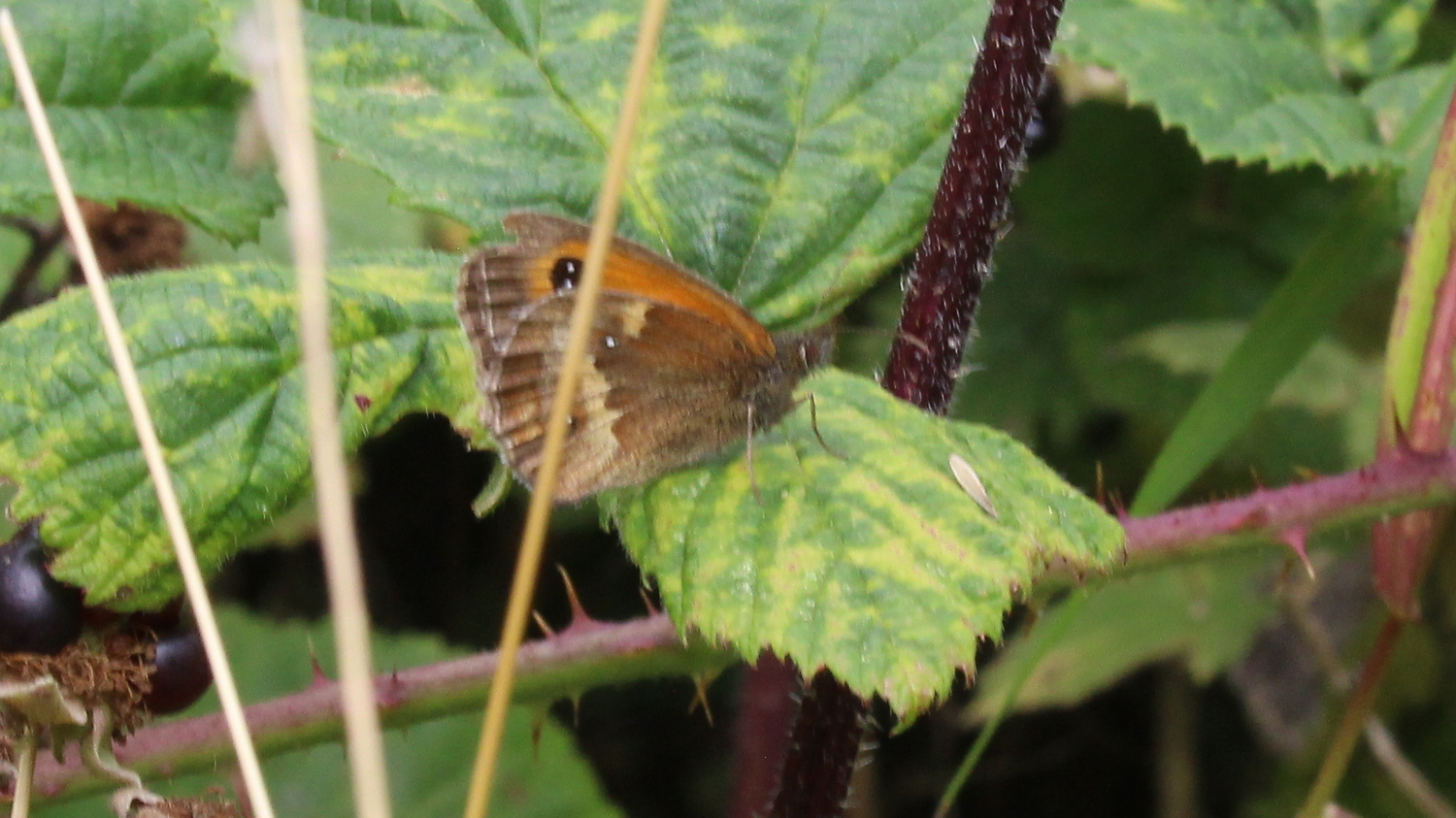
Out of focus, sorry, is the only shot we have ever got of the underside of the Gatekeeper, or Hedge Brown, butterfly. It’s a male, as we saw when he first landed with wings spread. There, were the characteristic dark patches on the forewings. These are scent cells, which assist meetings beteen males & females of the species. It has often been said, and I do not for single second dispute it (nay, I endorse it), that far from the male pursuing the female, it is the other way around. The proud male, striking attitudes which display his many attributes, before the seemingly drab, unprepossessing female, is in fact subject to the very opposite state of affairs.
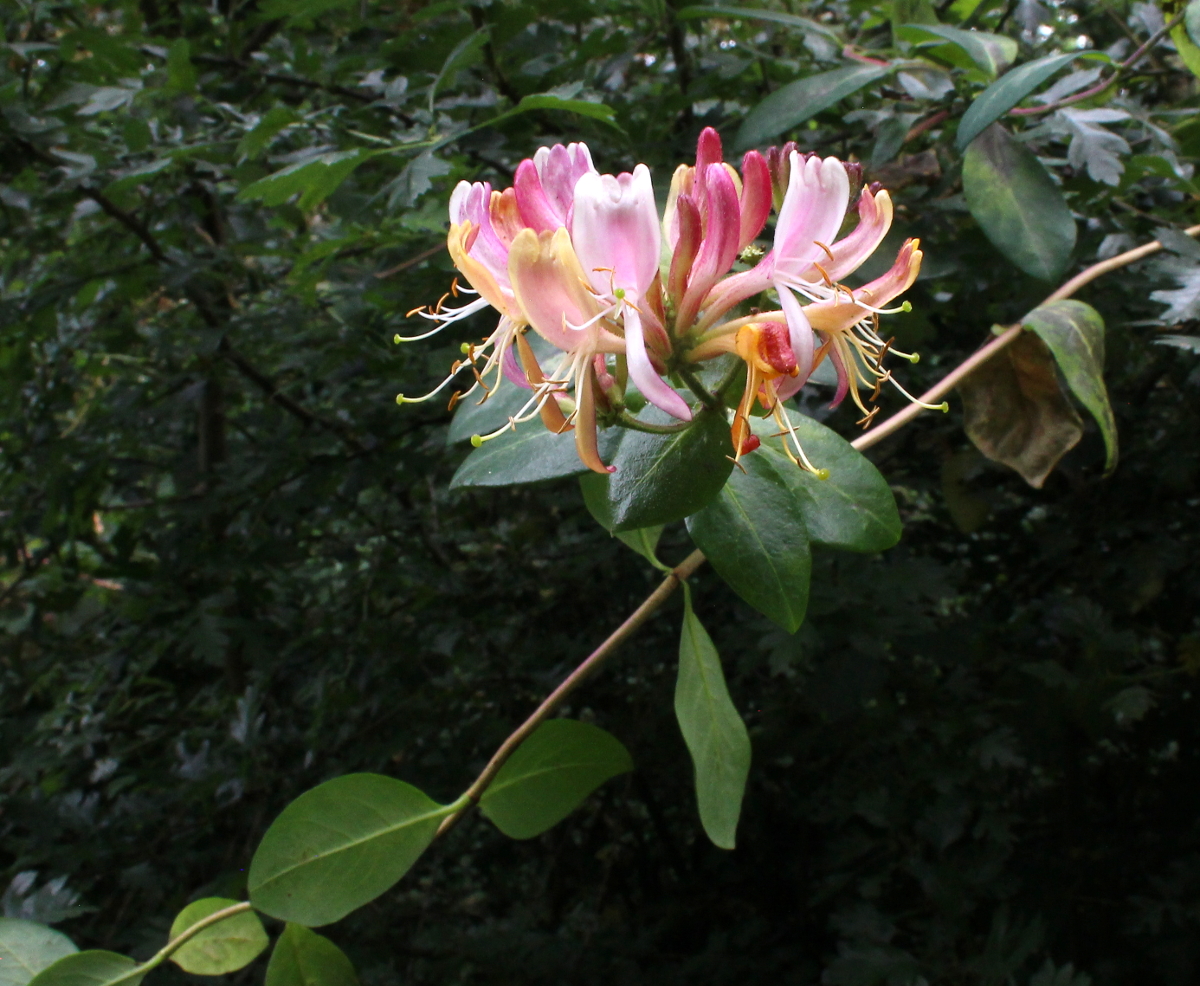
Lonicera periclymenum, the common Honeysuckle, always looks very exotic. It’s only now we looked up the scientific name that we learned it’s also called Woodbine. Its long, flexible stems were used, twisted or plaited, as ropes in prehistoric times. There’s a Time Team episode ‘Seahenge’ where this is demonstrated. Also see https://en.wikipedia.org/wiki/Seahenge
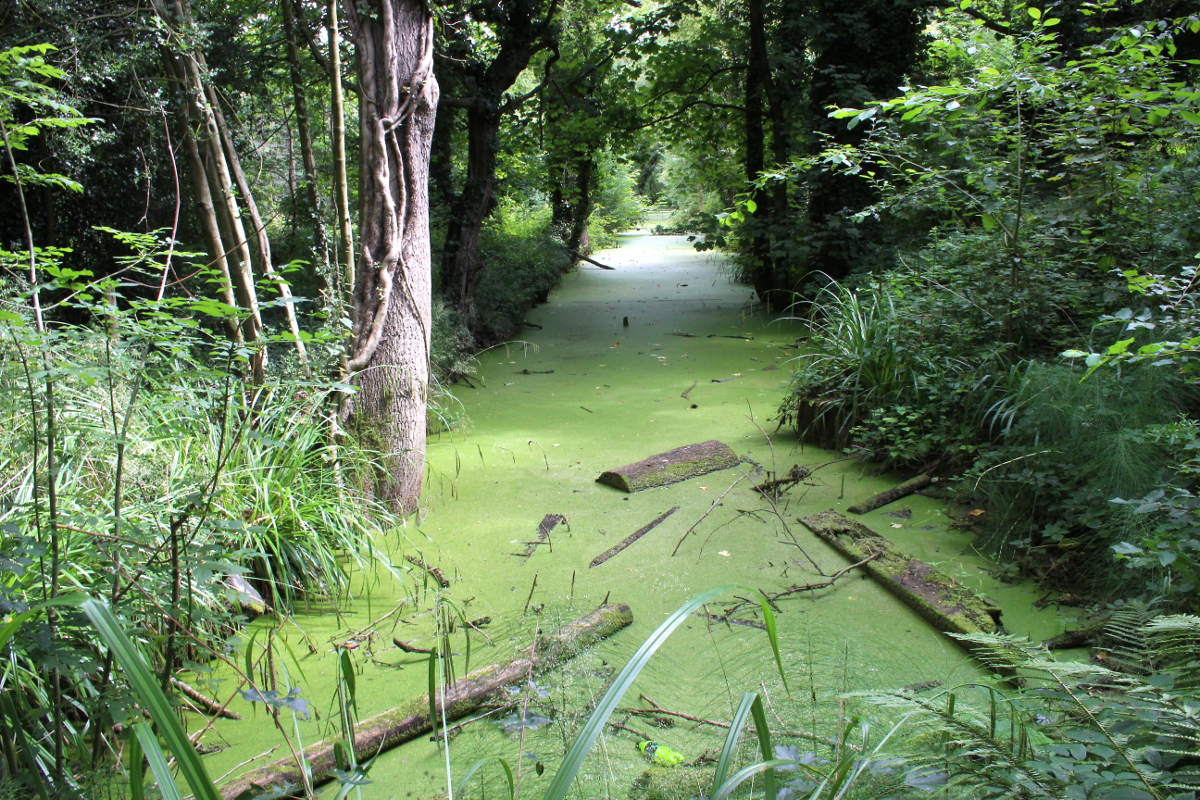
We aren’t far off the ruins now. This is the haha, which ran for a conderable either side of the frontage of Sandwell House. the trees have presumably grown since the house was demolished in 1928 & the estate entered a periood of neglect. The haha had a brick wall on one side of it – presumably that nearest the house? It was not, of course, filled with water originally.

This looks like a rose of some description, though the petals are a funny shape. One is aware that many varietes of rose – and other ornamental plants – once thought lost, have been rediscovered in the grounds of adabdoned stately homes, where they have hung on for centuries, competing with with the wild, rank vegetation that colonises such places.

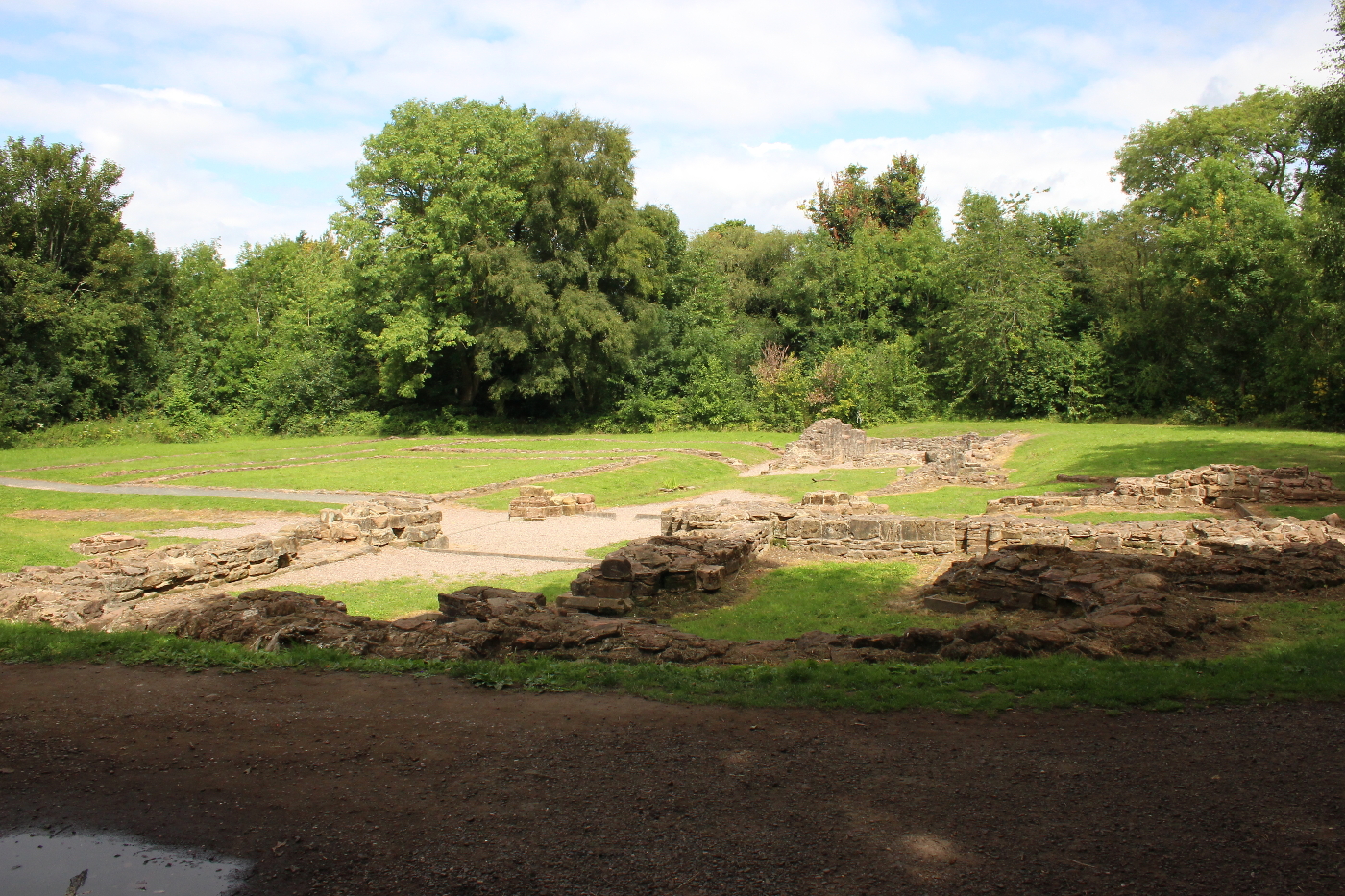
At last! The foundations of the Old Priory come into view. The site was subjected to extensive (though not total) archaeological excavation in the early 1990s, and an extensive report published.
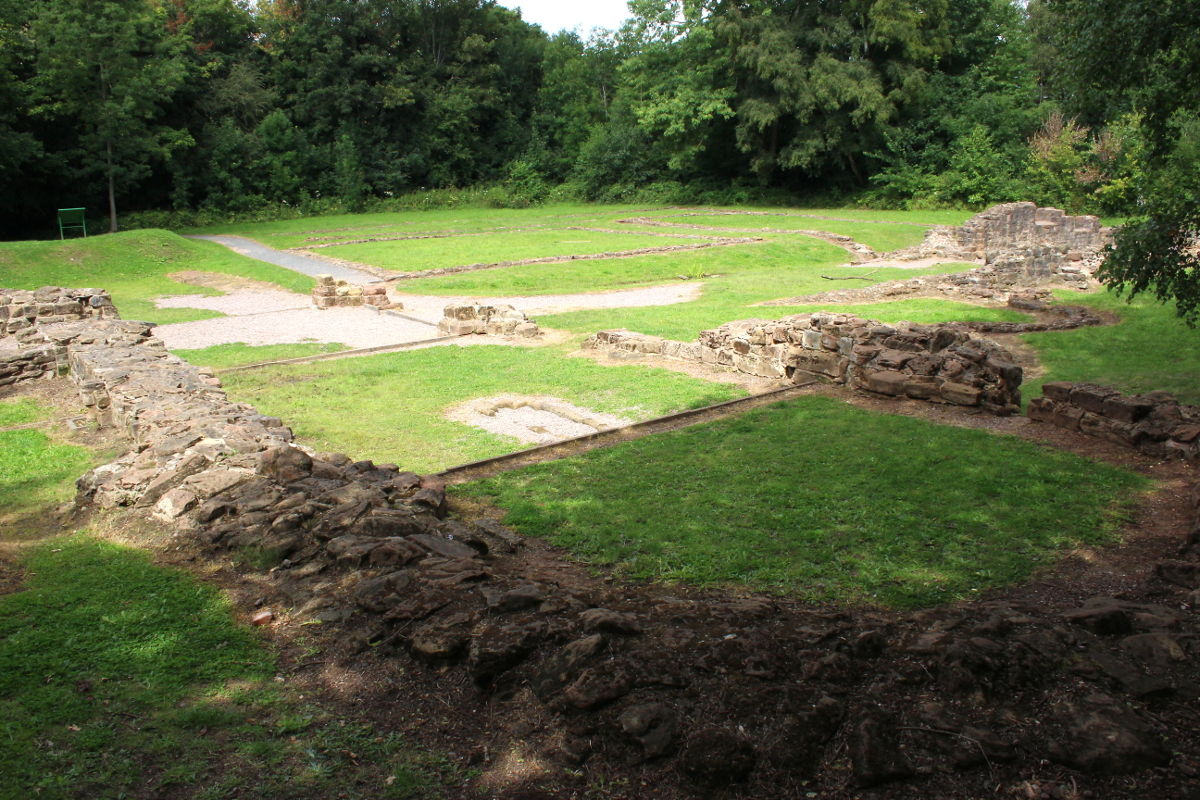
 Shot of a display panel at the site, showing five apses…
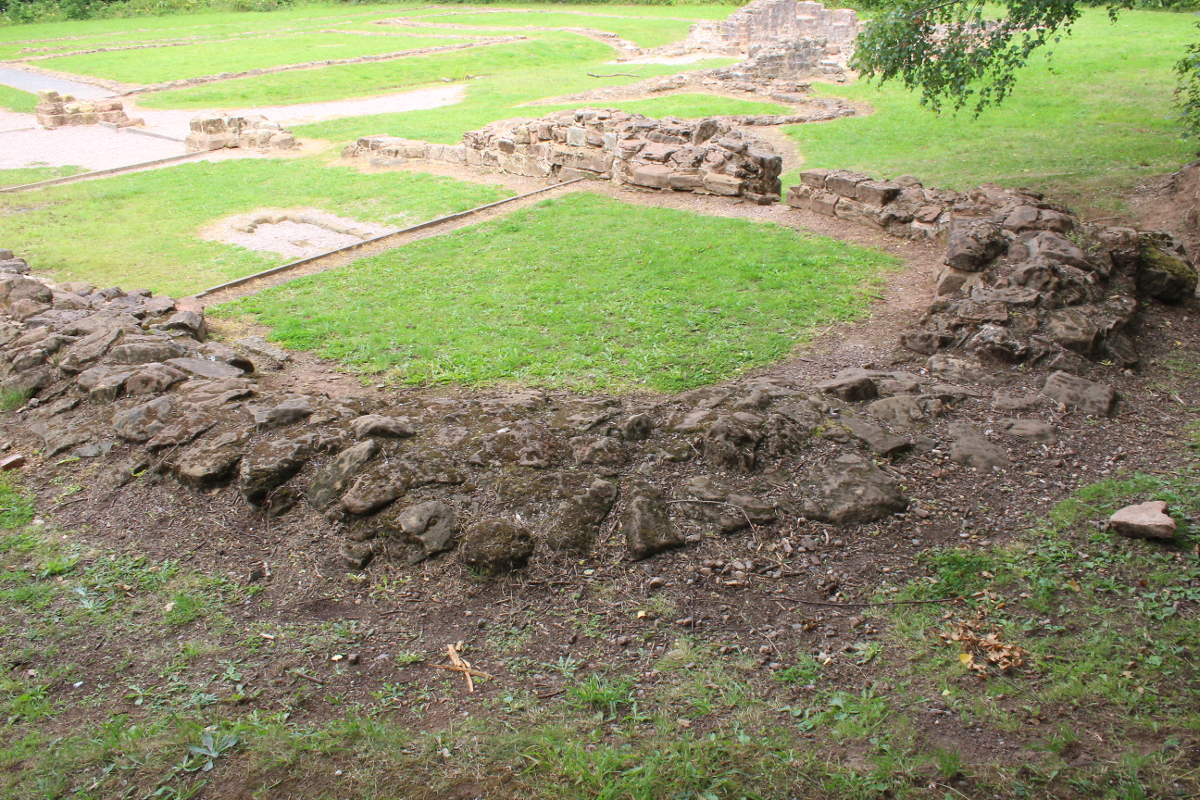
…and I guess this must be the main apse. But we have saved the best ’til last…
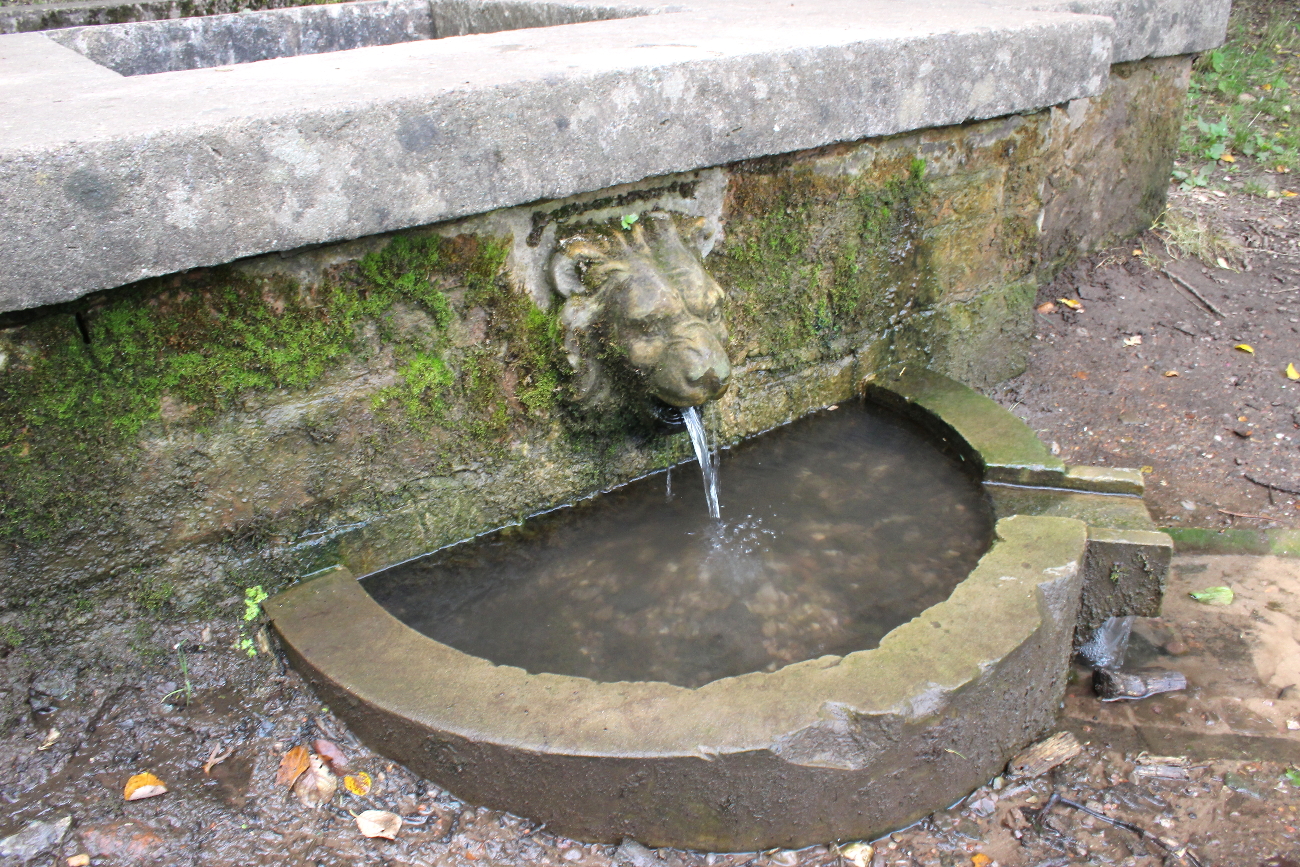 THE SAND WELL!